Introduction to the Monetary Policy Handbook
Monetary policy is an important part of New Zealand’s economic policy framework. Sound monetary policy promotes the prosperity and well-being of New Zealanders and contributes to a sustainable and productive economy. The Reserve Bank of New Zealand has been tasked with formulating New Zealand’s monetary policy through its Monetary Policy Committee (MPC), a committee comprising members both internal and external to the Reserve Bank.
The MPC is required to set monetary policy with the economic objective of achieving and maintaining stability in the general level of prices in New Zealand. This task is a complex one. It requires a sound understanding of New Zealand’s monetary policy framework, the specific objectives the MPC has been given, and the challenges and trade-offs that the MPC might face. It also requires an understanding of the New Zealand economy and the effects that monetary policy has on it. It is also important that MPC members follow decision-making processes that culminate in good decisions based on the available information.
This Handbook is published by the Reserve Bank’s Economics directorate. It presents our high-level understanding of key aspects of monetary policy in New Zealand. The Handbook has 2 main purposes: to support new MPC members to establish themselves in their roles and to support the New Zealand public’s understanding of monetary policy. The Handbook does not attempt to detail our entire understanding of monetary policy or the New Zealand economy. Instead, it serves as an introductory guide and a gateway to further discussion and research. Importantly, the Handbook is not intended to present a view to which MPC members must adhere, nor is its aim to present the views of the current MPC.
The Handbook is separated into 8 chapters.
- Chapter 1 describes the key features of New Zealand’s monetary policy framework, as established in the Reserve Bank of New Zealand Act 2021. It focuses on the Monetary Policy Committee’s Remit, Charter and Code of Conduct.
- Chapter 2 discusses how the Reserve Bank’s monetary policy objectives have evolved through time, and the key beliefs that underpin them today.
- Chapter 3 discusses the challenges and trade-offs the MPC may face in pursuing its monetary policy objectives, and the strategies that have been adopted in the past to navigate them.
- Chapter 4 discusses our understanding of the New Zealand economy.
- Chapter 5 describes how monetary policy transmits through it to influence inflation.
- Chapter 6 explains the MPC’s main policy tool – the Official Cash Rate (OCR) – and canvasses several other policy tools. The remainder of the Handbook focuses on effective decision-making.
- Chapter 7 presents a set of principles for effective MPC deliberation.
- Chapter 8 discusses the processes that support the MPC to reach appropriate policy decisions.
Chapter 1: New Zealand’s monetary policy framework and the duties of the MPC
1.1 Introduction
New Zealand’s monetary policy framework is set out in the Reserve Bank of New Zealand Act 2021 (the Act). The overall purpose of the Act (section 3) is to promote the prosperity and well-being of New Zealanders and contribute to a sustainable and productive economy.
The monetary policy framework is specified directly in the Act, and through three ‘secondary instruments’ that are provided for by the Act: the Remit, Charter, and Code of Conduct. This chapter describes New Zealand’s monetary policy framework and outlines some of the key requirements for the Monetary Policy Committee set out in both the Act and the secondary instruments, as well as broader supporting arrangements that have been established to support the framework.

1.2 The Monetary Policy Committee
Under the Act, the Reserve Bank has the function of formulating New Zealand’s monetary policy through the Monetary Policy Committee (MPC). The MPC consists of 5 to 7 individuals, comprising:
- the Governor
- 2 or 3 internal members who are Reserve Bank employees
- 2 or 3 external members who are not employees of the Reserve Bank.
Internal and external members are appointed by the Minister of Finance on the recommendation of the Reserve Bank Board and serve fixed terms.1,2 MPC members are appointed on the basis of having appropriate knowledge, skills and experience to assist the MPC to perform its functions, and cannot be appointed on the basis of representing a particular industry sector.3
There is also a ‘Treasury observer’, an employee of the New Zealand Treasury, who can attend and speak at meetings of the MPC, but who cannot vote on monetary policy decisions.
1.3 The MPC’s Remit, Charter and Code of Conduct
The MPC is responsible for formulating monetary policy to achieve and maintain stability in the general level of prices over the medium term. In doing so, it must meet the operational objectives in the Remit and act in accordance with the Charter and Code of Conduct.
In formulating monetary policy, the MPC is required to meet the operational objectives contained in the MPC Remit, and act in accordance with the MPC Charter and the MPC Code of Conduct. These 3 secondary instruments each serve a distinct purpose.
| Instrument | Purpose | Process for setting |
|---|---|---|
| Remit | Sets operational objectives for carrying out the function of formulating monetary policy. | The Remit is issued by the Minister of Finance and a new Remit may be issued at any time, but the Minister must consult the MPC first. The Reserve Bank must give the Minister advice about the Remit at least once every 5 years. |
| Charter | Sets additional transparency and accountability requirements, and guidance on decision-making procedures. | The Charter is set by agreement between the Minister and the MPC. It can be reviewed at any time and replacement must be considered whenever a Remit is issued. |
| Code of Conduct | Sets minimum standards of conduct for MPC members (for example, managing or avoiding conflicts of interest). | The Reserve Bank Board sets the Code of Conduct and can approve a new Code of Conduct at any time. |
1.3.1 The Remit
The Act provides the MPC with its high-level economic objective of achieving and maintaining stability in the general level of prices over the medium term. The Remit provides the MPC with more detail about how this high-level objective is to be defined or addressed – referred to as the ‘operational objective’. The Remit also provides the MPC with ‘secondary objectives.'
Monetary Policy Commitee Remit (PDF, 110 KB)
Section 1 of the December 2023 Remit states that the MPC’s operational objective shall be to:
(i) Achieve and maintain future annual inflation between 1 and 3% over the medium term, with a focus on keeping future inflation near the 2% mid-point. This target will be defined in terms of the All Groups Consumers Price Index, as published by Statistics New Zealand. For the purposes of this target, the MPC should discount disturbances to inflation that are expected to be temporary in a manner consistent with meeting the medium-term target.
While the operational objective for price stability is well defined (in terms of the numerical inflation target and measure), there is some room for interpretation regarding ‘medium term’ and ‘near the 2% mid-point’. This reflects that monetary policy affects the real economy and inflation with a lag (see chapter 5) and that the ‘optimal’ time horizon for inflation to return to target depends on the challenges facing the economy. The use of the phrase ‘medium term’, rather than a defined period of time, allows for the time horizon to be adapted if needed and provides flexibility for the MPC to respond to a wide range of economic circumstances (see chapter 3 on monetary policy strategy).4 Historically, monetary policy has aimed to get inflation back to the 2% mid-point in a reasonable time to mitigate the risks from inflation expectations becoming unanchored (see chapter 2).
The requirement for the MPC to “discount disturbances to inflation that are expected to be temporary” provides clarity to the public on what inflation targeting with a medium-term horizon may mean for monetary policy strategy. For example, as monetary policy operates with a lag, it may be appropriate for monetary policy to ‘look through’ temporary shocks to inflation.
Section 2 of the Remit provides the MPC with a range of additional considerations, often referred to as ‘secondary objectives’, to consider in the pursuit of the inflation objective. By identifying other important outcomes, these additional considerations provide guidance to the MPC on how it should use the flexibility inherent in the inflation objective (chapter 2 further discusses flexibility in the inflation objective).
(i) Have regard to the importance of protecting and promoting the stability of New Zealand’s financial system.
Section 119(1)(a) of the Act specifies that the MPC must “have regard to the importance of protecting and promoting the stability of New Zealand’s financial system” when formulating monetary policy. The same wording is reflected directly in the MPC Remit and aligns with one of the Reserve Bank’s other legislated objectives, “protecting and promoting the stability of New Zealand’s financial system”, set out in section 9(1)(b). This objective, known as the ‘financial stability objective’, is not a primary objective of monetary policy, but is an important objective of the Reserve Bank’s prudential policy (including macroprudential policy), as well as some of the Reserve Bank’s broader activities in financial markets.5,6
Including this requirement as a secondary objective for monetary policy reflects that monetary policy can have important implications for financial stability. For example, monetary policy can influence house prices and the cost of servicing mortgages, which in turn can affect financial stability. At the same time, prudential policies impact activity and inflation in New Zealand.
It remains an open question, in New Zealand and around the world, just how co-ordinated monetary and prudential policies should be.7 Most of the time, prudential policies, including macroprudential policies, will be the best way for the Reserve Bank to support financial stability. However, there may be situations where it is optimal for the MPC to reflect financial stability considerations in its formulation of monetary policy, while still pursuing the inflation objective. Chapter 3 briefly discusses how monetary policy could have regard to the importance of protecting and promoting the stability of New Zealand’s financial system.
(ii) Seek to avoid unnecessary instability in output, employment, interest rates, and the exchange rate.
This requirement reflects that monetary policy can impact a broad range of economic outcomes beyond inflation, and that instability (volatility) in these outcomes can be undesirable. The extent to which instability is ‘unnecessary’ is subject to interpretation – there are no rules or simple mechanical calculations to enable precise differentiation between necessary and unnecessary instability across all circumstances.8 Chapter 3 discusses how the Reserve Bank has interpreted this clause in the past, and what implications it has for the setting of monetary policy strategy.
Chapter 2 discusses the relationship between price stability and broader macroeconomic stabilisation in more detail.
Monetary policy communication must provide a clear and effective policy signal. Sections 3(a)-3(b) in the December 2023 Charter set out requirements to achieve this.
Clear central bank communication enhances the effectiveness of policy.9 Communication is a key part of monetary policy transmission as expectations about the future path of the Official Cash Rate can have a significant impact on the interest rates faced by households and businesses (see chapter 5). Effective communication helps financial market participants, economic analysts, the government and the public understand how the central bank will respond to the different forces that affect the economy. This clarity helps improve policy outcomes by keeping inflation expectations anchored and maintaining credibility in the MPC’s ability to meet its objectives.10
In general, there are three broad audiences for monetary policy communication. The MPC’s communication must be accessible to each group in both its writing style and distribution.
- Monetary policy announcements aim to influence the behaviour of financial markets. This refers to the traders and allocators of capital in financial markets who have direct influence on short- and long-term interest rates, as well as other asset classes in the economy.
- The Monetary Policy Statement (MPS) is intended to educate and advise economic analysts and others who are providing advice to traders in financial markets on recent developments and expectations for future economic developments.
- The announcement of the monetary policy decision, press conference and visual summary of the MPS are intended to communicate the MPC’s high-level outlook for the economy and monetary policy to businesses, journalists, the government and the general public.
Monetary policy communication should also enable public accountability. The transparency and accountability requirements for the MPC’s publications are expressed in section 2 of the Charter and section 130 of the Act.
Open and transparent communication is crucial for the public legitimacy of monetary policy. Communicating what data were used to inform policy, what perspectives were shared in the deliberations and how decisions were made enables the public and financial markets to assess the credibility of policy decisions ex ante. It also enables the public and markets to assess the credibility of the institution’s processes ex post (ex ante and ex post assessment are discussed in section 1.5.2). Communication of how key assumptions are updated as new information arises also enhances accountability.
As monetary policy decisions are made by a committee, public accountability of the decision can be at a group level, individual level or both. The MPC must aim to reach decisions by consensus (section 1(b)) and the Charter states that if consensus cannot be reached, the MPC will vote (with the Governor, as chairperson, having a casting vote if required) (section 1(c)). A non-attributed record of any vote must be published. This process suggests that, for the most part, the MPC will be held collectively accountable by the public for decisions made. Section 99(1) of the Act states that the performance of the MPC, and each member of the MPC, must be regularly reviewed by the Reserve Bank Board.
Consideration and publication of diverse views
The Charter specifies that the MPC will seek to reach decisions by consensus, which refers to “a decision which all members can support” (section 1(b)). Consensus decision making is neither compromise nor unanimity, but rather supports the best interests of the group as a whole. This means that there is freedom to disagree, and that all views are aired and considered during the decision-making process. Chapter 7 of this Handbook sets out how the MPC might be able to achieve an environment that best supports this type of decision making. This style of decision making raises the question of how much of the debate to make public and whether, or how, to allow additional expression of diverse views.
There can be tension between the goals of MPC public communication and the expression of diverse views. In particular, greater transparency of different views behind monetary policy trade-offs and strategy could reduce the clarity of the policy signal to the market. In addition, dissenting views might reduce the credibility of the decision to some observers. However, there are also areas of alignment between the goals of MPC communication and the expression of diverse views. For example, portraying the diverse range of views behind policy strategy could increase the public’s understanding of the final MPC decision, increase the public legitimacy of policy, and improve the market’s assessment of how the balance of views in the committee is developing. Publicly communicating the views behind the policy decision could also prevent groupthink in the MPC to the extent it increases accountability.
Several clauses in the Charter specify how the committee should balance the expression of diverse views with the need to provide a clear and effective policy signal and ensure public accountability. It specifies that:
- Announcements of monetary policy decisions will be accompanied by a summary record of the MPC meetings, which will include a description of any material differences of view and judgement discussed (section 2(a)).
- The Governor is the “sole spokesperson” for the announcement of the MPC decision (section 3(b)). Having a single voice ensures that official announcements send a clear and effective policy signal.
- Public remarks by MPC members regarding the MPC’s strategy and decision are to “draw on the MPC’s official communications and on the Governor’s media conference remarks where appropriate”, and “notice of such communication should be publicly advised in advance on the Reserve Bank’s website” (section 3(c)).
The Charter also includes requirements around communications related to sensitive information:
- Any non-public remarks on monetary policy or the economic outlook should “avoid providing, or appear to be providing, new information to a subset of individuals” (section 3(d)).
- MPC members “must refrain from any public communications relevant to monetary policy following the receipt of MPC briefing papers and prior to the decision being announced” due to financial market sensitivities (section 3(f)). The period following the receipt of the MPC briefing papers and prior to the decision being announced is referred to as the ‘blackout period’.
Section 3(e) of the Charter also permits MPC members to publicly communicate their individual views on the MPC’s policy strategy and decisions, the balance of risks or the economic outlook. It mitigates the potential for reduced policy clarity by requiring that members provide an opportunity for the MPC to comment within a reasonable timeframe in advance of any public communication, refrain from characterising the individual views of other MPC members and express their views in a manner that shows respect for other members, the MPC as a whole, and the reputation of the Reserve Bank. The Charter also requires that notice of such communication should be publicly advised in advance on the Reserve Bank’s website. Prepared remarks or either a full transcript or the key messages from any such communication should be published on the Reserve Bank’s website alongside their release elsewhere.
Summary of key regular output required
The Charter requires the MPC to publish each monetary policy decision “promptly” on the Reserve Bank’s website (in practice, “promptly” is expected to be on the same day that the decision is made – discussed further in chapter 8). The Charter also reiterates the requirement in the Act that a summary record of each MPC meeting be published. The Charter gives additional requirements that these summary records of meetings are to meet.
They are to include:
- an overview of the economic outlook
- the main risks to the economic outlook
- the policy options discussed
- any material differences in view or judgement about the economic outlook, risks or policy decision; and
- an unattributed record of any vote taken.
On a quarterly basis, the announced decision is also to be accompanied by a Monetary Policy Statement (referred to in more general terms as “regular reports on monetary policy” in the Act). Section 130 of the Act requires every report to:
- specify the approach by which the MPC intends to achieve the operational objectives;
- state the MPC’s reasons for adopting that approach; and
- contain all other information required by the Charter.
The additional requirements for these regular reports are contained in section 2(b) of the Charter. Each report must also:
- explain how the MPC has sought to meet the requirements of section 2 of the Remit (the secondary objectives); and
- when applicable, explain why inflation outcomes and/or expected inflation outcomes are outside of the target range, explain the reasons for this, the timeframe over which inflation is expected to return to the target midpoint and the reasons for that timeframe.
The Reserve Bank, not the MPC, is legally responsible under section 129 of the Act for delivering regular reports of monetary policy. However, the Act also states that the Reserve Bank must ensure that the report is approved by the MPC before it is delivered (see section 1.5.1 for procedural responsibilities of the MPC).
1.3.3 The Code of Conduct
The Code of Conduct sets minimum standards of ethical and professional conduct for MPC members. The key elements include:
- preparing for and participating in MPC meetings
- acting in the interests of the Reserve Bank, and not pursuing individual interests at the expense of the Reserve Bank
- declaring relevant conflicts of interest, or interests that could be perceived to be in conflict (some examples, such as currency trading, are discussed); and
- maintaining the confidentiality of information received in the course of being an MPC member, and never using that information or allowing others to use it for personal gain.
1.4 Additional arrangements to support the framework
In addition to the Act and secondary instruments, several other arrangements support New Zealand’s monetary policy framework.
Supporting arrangement |
Purpose |
|---|---|
| Strategy Statement | The Strategy Statement is owned by the MPC and presents a consistent approach to how the MPC formulates monetary policy to achieve its objectives over time. It is published to promote transparency, public understanding, and accountability. See chapter 3 for a discussion of strategy. |
| Risk Appetite Statement (RAS) | The RAS outlines a framework for consistently considering risks in MPC actions. These include actions related to the formulation of monetary policy as well as other actions that may be undertaken by individual MPC members. The RAS supports transparency around how the MPC may act in the face of trade-offs between these risks. |
| Memorandum of Understanding regarding the use of alternative monetary policy tools | Introduced in 2020, the MoU between the Minister of Finance and the Reserve Bank expresses a shared understanding of the Reserve Bank’s authority to use a broad suite of monetary policy tools (see chapter 6). It notes that some policy tools can come with financial risk to the Crown, and provides a mechanism for the Reserve Bank to seek government indemnification of financial risk associated with monetary policy actions. |
| Principles for monetary policy tools | The principles governing monetary policy tools were developed to provide a clear framework for how the Reserve Bank uses its suite of monetary policy tools. The principles reflect that the choice and design of monetary policy tools can impact a broad range of outcomes beyond the Remit objectives. There are five principles: effectiveness, efficiency, financial system soundness, public balance sheet risk and operational readiness. |
| Foreign Reserves Management and Co-ordination Framework (FRCF) | The FRCF is an agreement between the Reserve Bank and the Minister of Finance that governs how the Reserve Bank manages its foreign reserves. Among other things, the FRCF sets requirements around the level and composition of the Reserve Bank’s foreign reserves. The FRCF also governs the Reserve Bank’s use of foreign reserves for monetary policy purposes (see chapter 6). |
1.5 Evaluating MPC and the monetary policy framework
The Act includes several requirements relating to regular reviews of monetary policy and the MPC. These regular processes of review make sure the monetary policy framework remains fit for purpose.
1.5.1 Evaluating the MPC
In formulating monetary policy, the MPC is required to meet the operational objectives contained in the Remit, and act in accordance with the Charter and Code of Conduct. The MPC is held directly accountable for these responsibilities by the Reserve Bank Board. Section 99(1) of the Act states that:
For the purpose of performing or exercising its functions or powers in relation to the MPC, the board must regularly review the performance of the MPC, and each member of the MPC, in discharging responsibilities under this Act.
In addition, section 240(1) of the Act states that the Reserve Bank’s annual report must include “a statement as to whether, in the board’s opinion, the MPC and the members of the MPC have adequately discharged their respective responsibilities during the financial year” and a description of how the board has assessed this.
The responsibilities of the MPC and its members can be thought of as either procedural or performance-related in nature. The procedural responsibilities contained in the Act are for the MPC and its members to:
- approve regular monetary policy reports prepared by the Reserve Bank (at least four times a year) before the reports are delivered to the Minister (section 129(2)).
- be satisfied that those reports specify the approach by which the MPC intends to achieve the operational objectives and state reasons for adopting that approach (section 130).
- consider whether it is necessary or desirable to issue a replacement Charter when a new Remit is to be issued by the Minister (section 103(2)).
- have regard to any report produced by the Reserve Bank on a replacement Charter (section 103(3)).
- act consistently with the Act and MPC Remit and comply with the Charter and Code of Conduct (clause 40 of Schedule 3).
The performance-related responsibility of the MPC is to formulate monetary policy in accordance with the Remit, i.e. consistently with the inflation objective. Assessing whether the MPC has performed this critical task requires both ex ante and ex post approaches, as discussed in the following sections.
1.5.2 Review and assessment of the formulation and implementation of monetary policy
Section 131 of the Act requires the Reserve Bank to review and assess the formulation and implementation of monetary policy at least every 5 years. The Reserve Bank must deliver a report on this review and assessment to the Minister of Finance and also publish a copy on the Reserve Bank website. The Act also requires the Reserve Bank to ensure the MPC is consulted on a draft of the report. The first Review and Assessment of the Formulation and Implementation of Monetary Policy (RAFIMP) report covering the period from 2017 to 2022 was published in 2022.11
Ex ante assessment of monetary policy
Monetary policy affects the real economy and inflation with a lag. This means that monetary policy must be set today in order to achieve price stability the future. Additionally, economic shocks frequently influence inflation outcomes and the MPC cannot (and should not) be expected to have perfect foresight. A fair evaluation of monetary policy decisions can therefore be based only on the information that was available to the MPC at the time.
For these reasons, a balanced review of the formulation and implementation of monetary policy hinges crucially on understanding the macroeconomic context that motivated decisions at the time they were being made. That is, just how reasonable were monetary policy decisions given the information available at the time?
In the context of the Remit, a comprehensive ex ante assessment of monetary policy in New Zealand might ensure that the following criteria have been met:12
- The forecast for inflation settles within the target band and near the 2 percent midpoint over the medium term (accounting for disturbances to inflation that are expected to be temporary in a manner consistent with meeting the medium-term target).
- The forecasts, especially for inflation, are credible and reasonable.
- The monetary policy decision and projected policy path are consistent with delivering these forecasts.
- The monetary policy decision and projected policy path avoid unnecessary instability in output, employment, interest rates and the exchange rates, relative to other policy paths that would also ensure the operational objectives are met.
Ex post assessment of monetary policy
As noted above, given that monetary policy affects the real economy and inflation with a lag, it must rely on forecasts of future developments to determine how policy should be set today. However, in addition to ‘real-time’ analysis, a balanced review also requires an evaluation of the appropriateness of monetary policy decisions based on the judicious use of hindsight. While hindsight should not be used to evaluate particular decisions made under very specific circumstances, it can provide broader lessons on the monetary policy framework and the broad appropriateness of decisions made within that framework.
Performance criteria for ex post assessment could include:
- Did the MPC respond reasonably to new information? If the Reserve Bank is responding to new information effectively, then there should be no systemic biases in its forecasts and the accuracy of those forecasts should compare well to other forecasters.
- Were developments communicated effectively?
- Was the credibility of the monetary policy framework maintained? Are the medium- to long-term forecasts for inflation and measures of inflation expectations credibly near the target midpoint?
1.5.3 Review of the MPC Remit
Under clause 2 of Schedule 3 of the Act, the Reserve Bank is required to provide advice to the Minister of Finance about possible changes to the Remit at least every 5 years. This ongoing process of review ensures that the objectives that guides monetary policy decisions best supports the economic wellbeing of New Zealanders, and remain relevant and fit-for-purpose in light of changes to the structure of the economy.
In the process of developing advice, the Reserve Bank must consult the MPC, seek views of members of the public, and consult the Minister on the scope of the Remit advice.
The first Remit Review was conducted in 2022-2023.13
1.6 Implementation of monetary policy
The MPC specifically is tasked with formulating monetary policy, which includes deciding the approach by which the operational objectives set out in the Remit are intended to be achieved (section 117). However, the Reserve Bank has the function of implementing the policy formulated by the MPC (section 120), a function ultimately governed by the Reserve Bank Board. For example, in the case of the Official Cash Rate – the Reserve Bank’s primary policy tool – the MPC decides the level that should be set at. The Reserve Bank’s Financial Markets directorate then implements the rate by factoring it into its activities in financial markets (see chapter 6).14
Some monetary policy tools can involve financial risks to the Reserve Bank. Under section 121 of the Act, the Reserve Bank is not required to implement monetary policy formulated by the MPC if the Board considers that it would be inconsistent with its financial responsibility duties. These duties include ensuring that the Reserve Bank “operates in a financially responsible manner” and “prudently manages its assets and liabilities”. The Board sets out its approach to complying with this duty in its Statement of Financial Risk Management.15
Chapter 2: Monetary policy objectives – price stability and macroeconomic stabilisation
2.1 Introduction
The foundations of New Zealand’s current monetary policy framework were first put in place with the introduction of a formal inflation targeting framework through the Reserve Bank of New Zealand Act 1989 (‘the 1989 Act’) which came into effect in 1990. This chapter outlines the history of inflation targeting in New Zealand and describes how New Zealand’s monetary policy objectives have evolved in recent decades.16
Despite the evolution of the framework, including new legislation via the Reserve Bank of New Zealand Act 2021 (‘the 2021 Act’), there are a number of fundamental and enduring features of monetary policy in New Zealand that arose from the 1989 Act. This chapter also discuss the key beliefs underlying the monetary policy objectives the Reserve Bank has today.
2.2 Recent history of New Zealand’s monetary policy objectives
During the late 1970s and 1980s, New Zealand’s economy experienced persistently high rates of inflation, following a period of comparatively modest inflation during the 1960s. This experience generated a strong distaste for high inflation rates, with inflation regarded as a pressing macroeconomic issue that needed to be resolved with public policy. With many countries having experienced similar episodes of high inflation during the same period, economists’ understanding of inflation developed significantly through the 1970s and 1980s. The public’s attitude towards inflation, and the theoretical explanations for high inflation that were developed, set the stage for New Zealand’s inflation-targeting regime.17
Bringing high inflation under control was a key priority for the Labour Government that came into power in New Zealand in 1984. In 1986, the then Minister of Finance Roger Douglas invited officials to explore options for reforming the monetary policy framework. Prior to 1990, the monetary policy was directed at a range of objectives such as supporting production, trade, full employment and price stability, and the Minister of Finance had significant influence over monetary policy decisions. Politicians faced an incentive to use monetary policy to provide temporary boosts to economic growth and employment at the expense of long-term price stability and were often unwilling to face the short-term costs to output and employment that disinflation would bring with it.18,19
The framework that emerged from the reforms – enacted through the 1989 Act – was the culmination of various strands of economic thought and the principles that were underpinning the wider reform of New Zealand’s public sector at the time. The 1989 Act formally recognised price stability as the primary objective of monetary policy, provided the Reserve Bank with operational independence to pursue its price stability objective, and made the Reserve Bank more accountable for its actions.20 Under the 1989 Act, the Minister of Finance and Governor of the Reserve Bank agreed successive Policy Target Agreements (PTAs) which defined the inflation target for the Reserve Bank.
Following the introduction of inflation targeting in New Zealand, many developed countries also adopted explicit inflation-targeting regimes.21 The shift to inflation targeting was a significant factor in bringing inflation under control, following the high and volatile inflation prior to 1990.
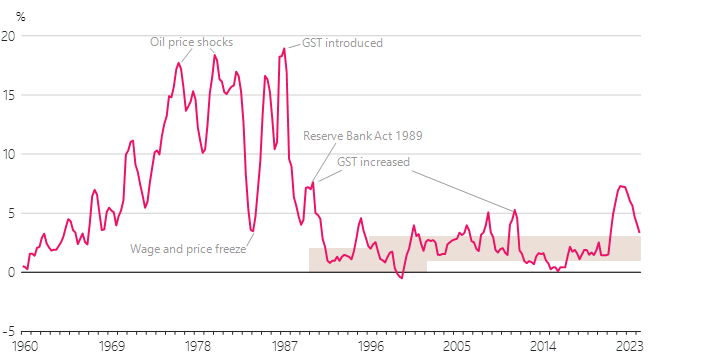
In New Zealand, as with many other advanced economies, the monetary policy frameworks of the 1990s had a much greater focus on achieving low and stable inflation. However, as the Reserve Bank’s credibility in maintaining price stability built up over time, the framework gradually evolved to become more flexible. This enabled the Reserve Bank to consider other important outcomes, such as economic output and employment, in its pursuit of price stability. These changes were expressed through various changes made to PTAs and Remits over time. This general approach, referred to as ‘flexible inflation targeting’, is the prevailing monetary policy framework across advanced economies globally.
The legislation underpinning monetary policy has continued to evolve. In 2018, amendments to the 1989 Act brought about several changes to the framework, which were later carried through into the Reserve Bank Act 2021 (‘the Act’) as part of a wider review to update and modernise the Reserve Bank’s legislation. The 2018 changes included establishing the Monetary Policy Committee, replacing PTAs with monetary policy Remits set by the Minister of Finance, and introducing ‘maximum sustainable employment’ as an economic objective for the Reserve Bank in addition to maintaining price stability. Maximum sustainable employment was later removed as a primary objective through amendments to the Act and Remit in 2023.
2.3 Price stability as a primary objective of monetary policy
Since 1990, price stability has been a primary objective of monetary policy in New Zealand. This reflects that price stability is considered to be the best long-run contribution monetary policy can make to wellbeing.
Practical experience, in the United States and elsewhere, demonstrated that monetary policy can be an effective tool for restoring and maintaining low rates of inflation. For example, the policies of former Chairman of the Federal Reserve, Paul Volcker, are considered to have been instrumental in lowering US inflation in the early 1980s.22 While in the short run monetary policy can also be used to support other important outcomes, like economic output and employment, it is widely accepted that it cannot reliably do so in the long run – except, for example, through the benefits of price and macroeconomic stability.
The focus on price stability also reflects the damage that high or volatile inflation can do for the economy and the wellbeing of New Zealanders.23 The consequences of inflation include:
- High inflation can distort price signals that embed important information about the scarcity and costs of different goods and services, and lead to resource misallocation. When inflation is high, such distortions can arise if certain firms or industries are slower or more reluctant to adjust prices or wages than others.
- Inflation can distort the tax system, leading to resource misallocation. As nominal interest income is taxed in New Zealand, higher inflation lowers real after-tax returns. This can affect people’s saving and investment decisions, particularly between assets where compensation for inflation is taxed (e.g. interest on bank deposits) and asset classes where it is not always taxed (e.g. capital gains on property and equities).
- In a progressive tax system, inflation can cause people to move into higher tax brackets and pay a higher marginal tax rate, even if their real income hasn’t changed.
- Unanticipated inflation can have significant distributional effects. By reducing the real value of debt, inflation redistributes wealth from savers to borrowers. It also reduces the purchasing power of people who have fixed nominal incomes.
- Higher inflation can make it more challenging for some people to service their mortgages, because lenders require compensation for inflation via higher interest rates. While borrowers benefit as inflation erodes the real value of the loan principal, the higher up-front interest payments can make it more difficult to obtain and service a mortgage.
Many of the consequences of inflation are exacerbated when inflation is extremely high or variable.24 The same channels can also lead to distortions and distributional effects in the case of high or volatile deflation. For example, as with unanticipated inflation, unanticipated deflation has distributional effects, in this case by increasing the real value of debt and redistributing wealth from borrowers to savers.
2.3.1 Targeting low but positive inflation
Despite the costs of inflation, central banks have tended to target low but positive rates of inflation, such as the 1–3 % range specified in the current Remit.25 One reason for this is that most measures of inflation, such as the Consumers Price Index measure that the MPC targets, have an upward bias and therefore slightly overstate inflation.26 However, the positive target range also reflects a desire to avoid issues that can be exacerbated in an environment of low inflation, or deflation.
In particular:
- Firms and workers can be reluctant or slow to agree declines in nominal wages, even if demand for labour has fallen. This can lead firms to lay off staff or cut hours more than they would if nominal wages could adjust more flexibly. Inflation can help facilitate labour market adjustment, by allowing real wages to adjust lower over time to reflect supply and demand, even without changes in nominal wages. Deflation, on the other hand, can exacerbate the issue.
- Inflation can lessen the challenges created by the Effective Lower Bound (ELB) on the central bank’s policy interest rate. This is because higher expected rates of inflation allow central banks to achieve lower real interest rates for a given nominal rate.
2.3.2 Operational independence and an inflation target
Price stability has long been one of the stated objectives of monetary policy in New Zealand, even during the high inflation of the 1970s and 1980s. However, the institutional frameworks for monetary policy prior to 1990 did not always lead to monetary policies that were consistent with price stability.
In the 1980s, an important objective for monetary economics was to explain why inflation had become so high in the 1970s. One strand of the monetary policy literature argued that governments are innately predisposed to have an inflationary bias; they would ‘cheat’ on commitments to maintain stable monetary policy to boost economic activity in the short term. People would anticipate such cheating and act accordingly, and the consequence would be higher inflation with little real gain. Several solutions were proposed for this problem, chief among them an independent central bank tasked with price stability. Walsh (1995) provided a solution that involved assigning a contract to the governor of the central bank with payoffs that depended on the realised rate of inflation.
To some extent, Walsh’s research provided an ex-post justification for the inflation targeting framework that emerged in New Zealand with the 1989 Act. The 1989 Act appointed the Reserve Bank Governor as the monetary policy decision-maker, rather than the Minister of Finance. This ensured that short-term political pressures – often related to election cycles – did not influence monetary policy decisions.
This idea is referred to as operational independence – the freedom of decision-makers to conduct monetary policy without the influence of the elected government of the day.27
Importantly, operational independence was combined with clear inflation targets specified through successive PTAs, and mechanisms for the government to hold decision-makers accountable. This allowed monetary policy to be formulated in a way that established – and then maintained – a high degree of price stability. This combination of operational independence, clear targets, and accountability mechanisms has remained a cornerstone of New Zealand’s monetary policy framework.
A key outcome of these arrangements has been to build the credibility of monetary policy in achieving the inflation target. In this context, credibility of monetary policy refers to the idea that the public holds a durable belief that monetary policy will achieve its objective of price stability.
If the public expects that the central bank will achieve its inflation target, this ‘anchoring of expectations’ around a published target makes it more likely that prices and wages will be set in a manner consistent with it, even in the face of shocks to the economy.
Given these benefits, maintaining credibility of monetary policy has been an important consideration in the successive reviews of PTAs, Remits, and the broader monetary policy framework that have followed the 1989 reform.
2.4 Price stability and macroeconomic stabilisation
The overarching purpose of monetary policy is to promote the prosperity and wellbeing of New Zealanders.28 While price stability is considered monetary policy’s best long-run contribution to welfare, there is still scope for monetary policy to support wellbeing by reducing volatility in real macroeconomic outcomes such as output and employment. However, there are important trade-offs to consider.
2.4.1 The relationship between price stability and macroeconomic stabilisation
The short-run relationship between price stability and macroeconomic stability depends on circumstances in the economy and the nature of the shocks it faces. Demand shocks influence inflation and economic activity in the same direction. Because monetary policy works through demand, in the event of a demand shock it can simultaneously dampen the impacts on activity and inflation, albeit with a lag.
However, supply shocks push inflation and economic activity in opposite directions. This creates a trade-off for monetary policy, because responding to dampen the inflation impacts of a supply shock can exacerbate the impact on economic activity.
Taylor’s (1979) efficiency frontier (figure 2.2) illustrates this trade-off by showing all the combinations of inflation and output volatility that monetary policy can achieve. The position on the efficiency frontier that monetary policy achieves depends on the weight the policymaker places on avoiding inflation volatility compared to output volatility.
Whether the point on the efficiency frontier is welfare maximising depends on the public’s preferences and attitudes across inflation and output volatility. Strict inflation targeting is only welfare maximising if the public does not care about output volatility at all.
When considering stabilisation of real macroeconomic variables, frameworks like Taylor’s tend to focus on output stabilisation, but the insights can also apply to other outcomes that are correlated with output, such as employment.
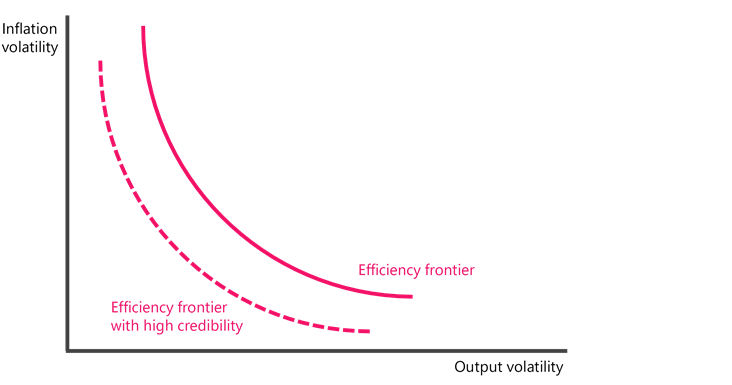
Monetary policy can achieve a better trade-off between inflation volatility and output volatility when the inflation objective is credible (Clarida et al. (1999)). This is represented in Figure 2.2 by the efficiency frontier where monetary policy credibility is high. By anchoring inflation expectations, credibility changes the way in which shocks to the economy feed through into inflation. If a shock causes inflation to deviate temporarily from target, firms and households will be more likely to continue to set prices and wages on the basis of inflation returning to target when the target is credible, and the overall impact on inflation will be lower. In the case of a supply shock, this provides the central bank with more scope to permit inflation to temporarily deviate from target in order to reduce output volatility.
2.4.2 Incorporating greater flexibility in inflation targeting
Stricter inflation-targeting frameworks, like those prevalent in the 1990s, provide relatively limited scope for central banks to consider volatility in the real economy when trade-offs between price stability and real economy outcomes, such as output and employment, arise. However, there are a number of ways in which the specification of central bank mandates can reflect the importance of stability in the real economy. The most common approach has been to introduce flexibility into the price stability objective, and to specify other outcomes that the central bank should also consider.29Such ‘flexible inflation-targeting’ frameworks permit central banks to consider stability in the real economy in their pursuit of price stability.
While adding flexibility can allow for a wider range of considerations in formulating monetary policy, if price stability is not maintained, the credibility of a central bank’s commitment to the inflation target can be diminished. This tension between maintaining credibility and having flexibility to consider other important economic factors can lead to ‘time-inconsistency’ problems. Even when it might otherwise be optimal for today’s outcomes that monetary policy focuses on stabilising output or employment, doing so could reduce a central bank’s credibility in achieving its inflation objective.30
Given the importance of maintaining credibility, the main mechanism for monetary policy to consider general macroeconomic stabilisation in the presence of trade-offs is to meet its inflation target more slowly. Policymakers may temper the magnitude of policy responses to achieve inflation targets over a slightly longer time horizon, thereby reducing volatility in output and employment.
In New Zealand, the credibility built up following the introduction of inflation targeting improved the trade-off between inflation volatility and output volatility. This made it less costly to incorporate greater flexibility in the Reserve Bank’s inflation objective. This evolution has been reflected in New Zealand’s monetary policy framework in several ways:
- While early Policy Target Agreements (PTAs) included strictly defined timeframes for achieving price stability,31 PTAs and Remits since 2002 have defined the time horizon as “over the medium term”. They have also incorporated general wording emphasising that the Reserve Bank should discount temporary disturbances in inflation.32 These changes have provided more scope for monetary policy to permit inflation to deviate from the target range.
- Additional secondary objectives have been added to PTAs and Remits.33 Over time, the specification of these objectives has introduced greater flexibility to consider macroeconomic stability. For example, the current Remit requires the Monetary Policy Committee (MPC) to “seek to avoid unnecessary instability in output, employment, interest rates and the exchange rate” in pursuing the inflation objective.34
- Between 2018 and 2023, supporting maximum sustainable employment (MSE) was included as a second primary objective alongside the inflation objective, formally giving monetary policy a dual mandate during that period.35
While many changes to PTAs and Remits over time have increased the flexibility of the framework, some adjustments have focused on bolstering the credibility of the price stability objective. For example, in late 2023 the MSE objective was removed as a primary objective. This amendment was consistent with views expressed in the first Remit Review that prioritising the inflation objective would support the credibility of the inflation target.
Chapter 3: Monetary policy strategy
3.1 Introduction
Sound monetary policy can make a significant contribution to the well-being of New Zealanders by maintaining price stability and dampening cycles in output and employment.37 But achieving this objective is not straightforward. Economic conditions are constantly evolving, and monetary policy decision makers must make complex choices in a timely and consistent manner. These decisions need to account for trade-offs between objectives, uncertainty about the state and structure of the economy, and the transmission of policy. Given these difficulties, having a clear and effective strategy can help to promote sound decision making and communication, and increase the likelihood that the important goals of monetary policy are achieved.
This chapter provides a framework for considering the components of effective strategy in the context of a flexible inflation targeting regime, and discusses the Reserve Bank’s past strategic approach. The framework is based on the Reserve Bank’s experience of setting monetary policy, the approach of other central banks,38 and the literature on strategy and monetary policy.
This chapter is not an expression of the MPC’s chosen monetary policy strategy. The MPC’s strategy can evolve through time, and the MPC separately publishes a Statement of the MPC’s monetary policy strategy, which sets out how the MPC intends to achieve its price stability objective over time, accounting for trade-offs and uncertainty.39
3.2 Components of an effective strategy
As referenced in chapter 1, the MPC is tasked with making monetary policy decisions to achieve a set of economic objectives. We have found the summary of strategy provided by Rumelt (2011) to be particularly helpful in characterising various elements of the monetary policy decision. Using this summary, the three parts of an effective strategy are:
- The careful diagnosis of an important challenge;
- A guiding policy for dealing with the challenge; and
- A set of coherent actions to carry out this guiding policy.
Chapters 1 and 2 set out the important challenge of maintaining price stability. This chapter focuses on setting a guiding policy for dealing with this challenge and briefly introduces some coherent actions to carry out the guiding policy. Figure 3.1 illustrates this layering of strategy decisions in monetary policy.
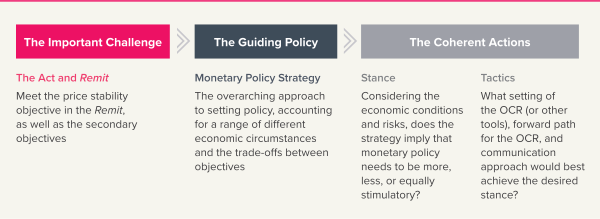
The Reserve Bank has sometimes referred to the guiding policy for achieving its mandate as its ‘monetary policy strategy’. Rumelt (2011) comments: “The guiding policy specifies the approach to dealing with the obstacles called out in the diagnosis [of the challenge]. It is like a sign-post, marking the direction forward but not defining the details of the trip.”
In the case of monetary policy, economic shocks that push inflation away from its target range and midpoint can be thought of as ‘obstacles’. The trade-offs that arise between achieving the operational objective and secondary objectives in the Remit are other obstacles. Therefore, monetary policy strategy can be thought of as an overarching approach that guides policy setting across the range of economic circumstances and trade-offs that are likely to arise.
Coherent actions are “feasible coordinated policies… and actions designed to carry out the guiding policy”40. In the context of monetary policy, coherent actions can refer to specific decisions on the stance of monetary policy (that is, how stimulatory or contractionary policy should be) and the tactical approaches used to implement the strategy at each decision meeting (for example, movements of the OCR and forward guidance language).
3.3 Guiding policy: monetary policy strategy
Monetary policy strategy is the MPC’s guiding policy for how monetary policy will achieve its objectives, setting out how the MPC intends to factor in, or respond to, changes in the economy and outlook. A robust strategy should outline a consistent approach for making policy, as well as provide a consistent approach to weighing up the risks and uncertainty inherent in inflation forecasts.
A shared understanding and agreement between the MPC members about monetary policy strategy can assist with monetary policy deliberation, communication, and credibility.
This section discusses the Reserve Bank’s past approach to monetary policy strategy. We begin with the core principles that have underpinned this approach, before discussing the trade-offs between primary and secondary objectives, and how uncertainty can influence strategy.
3.3.1 Core principles of flexible inflation targeting
We first summarise two of the core principles that underlie the Reserve Bank’s understanding of flexible inflation targeting in New Zealand, which were also discussed in chapter 2:
1. low and stable inflation is monetary policy’s best long-run contribution; and
2. credibility of the policy targets is crucial.
The first principle reflects a widely-held economic theory that, in the long run, monetary policy can only affect the level of prices. Facilitating clear and predictable price signals can enable resources to be efficiently allocated in the economy and therefore support employment and output. Monetary policy cannot materially influence the long-run (or trend) level of employment, and therefore there is no trade-off between employment and inflation at long time horizons. However, monetary policy can influence cyclical movements in the real economy in the short-to-medium term.
The second principle reflects that the effectiveness of monetary policy relies heavily on the credibility of the Reserve Bank’s inflation target. If the public believe that the Reserve Bank has the will and the capability to manage inflation over the medium term, then they are more likely to behave in a way that helps to stabilise the economy. The importance of expectations means that the Reserve Bank needs to act and communicate in such a way that the public believes it has the will and capacity to achieve its mandated objectives. In turn, the public’s expectations largely depend on the credibility of the Reserve Bank’s monetary policy strategy and communications.
3.3.2 Key aspects of the Reserve Bank’s historical monetary policy strategy
Inflation forecast targeting
Historically, the Reserve Bank’s monetary policy strategy has generally been to choose a policy stance that is expected to result in inflation reaching the target mid-point after about two years. The time to target has been allowed to vary to reflect consideration for the Reserve Bank’s secondary objectives. The typical timing of about two years reflects the view that a monetary policy decision today is fully transmitted through the economy after about two years.
This approach is referred to in the monetary policy literature as inflation forecast targeting – the central bank sets policy so its inflation forecast is at target.
Symmetry of policy targets
In the past, the Reserve Bank has treated its policy target (inflation, and previously also maximum sustainable employment) as symmetric. In other words, deviations above and below target have been treated, and responded to, in the same way.41 The specification of the inflation target, in terms of a target range with a focus on the mid-point, implies a symmetric approach.
A symmetric approach to inflation helps to anchor inflation expectations at the target mid-point, improving the effectiveness of policy.
3.3.3 Flexible inflation targeting trade-offs
The Remit requires the MPC to take into account several secondary objectives (see chapter 1). This section will explain the trade-offs that may occur between the inflation objective and secondary objectives.
Specifically, in pursuing the inflation objective in the Remit, the MPC must consider how secondary objectives should be traded off against the inflation objective when a change in the monetary policy stance would improve outcomes for the inflation objectives, but worsen outcomes for the secondary objectives (or vice versa).
(i) Have regard to the importance of protecting and promoting the stability of New Zealand’s financial system
As discussed in chapter 1, monetary policy can have important implications for the stability of New Zealand’s financial system. Prudential policy, including macroprudential policy, is the Reserve Bank’s main tool for supporting the stability of New Zealand’s financial system. However, there may be situations where it is optimal for the MPC to reflect financial stability considerations in its formulation of monetary policy, while still pursuing the inflation objective.
For example, the MPC might use monetary policy to help lean against risks to financial stability (for example, those arising from rapid growth in credit and asset prices), as long as doing so does not compromise the operational objective in the Remit.42
(ii) Avoiding unnecessary instability
Section 2(b)(ii) of the Remit also requires the MPC to “seek to avoid unnecessary instability in output, employment, interest rates, and the exchange rate”. The consideration for stability in economic output, employment, interest rates and exchange rates is fundamentally about how quickly the MPC intends to meet its inflation objective.
There are several trade-offs in this decision, and these trade-offs are likely to differ depending on economic circumstances. The MPC could meet its target faster at the cost of creating more volatility in the economy and interest rates. Or the MPC could meet its target more slowly, with the cost of more-prolonged deviations from the inflation target and the risk of inflation expectations becoming unanchored.
The requirement to avoid unnecessary instability in the macroeconomy has been a key consideration behind the Reserve Bank often setting policy with the aim of returning inflation to the target mid-point over a period of time, such as within two years, and allowing this time horizon to vary depending on the shocks hitting the economy.
The MPC Charter requires the MPC to explain the timeframe inflation is expected to return to target, and the reasons for that timeframe, in the Reserve Bank’s quarterly Monetary Policy Statements.
If the MPC tried to return inflation to target as quickly as possible, then this would result in higher economic volatility and large interest rate adjustments. Interest rate changes take time to have their full effect, so larger changes in interest rates would be required to return inflation to target more quickly.43 Increased volatility in interest rates would result in undesirable volatility in output, employment, and the exchange rate.44 Therefore, the Reserve Bank has previously interpreted this clause to mean that monetary policy should be formulated such that there is no alternative interest rate path that could improve stability, subject to the operational objectives being met.45
Conversely, if the MPC maximised interest rate stability and chose an interest rate path such that it would take a long time, such as five years, to return inflation to target, it would also face costs. Firstly, the operational objectives would be deviating from their targets for longer. Secondly, the longer that the Reserve Bank allowed inflation to deviate from target (and did not show a credible plan to return it to target), the more likely it is that inflation expectations would become unanchored.
If inflation expectations became unanchored, it would make it harder to meet the inflation target, and the changes in interest rates required to re-anchor expectations would likely have large effects on the wider economy.
With regards to exchange rate stability, movements in interest rates have an effect on the exchange rate. Monetary policy has limited ability to affect the real exchange rate beyond the near term, and there can be significant costs in attempting to stabilise the exchange rate.
However, the Reserve Bank has considered the effects of the medium-term exchange rate cycle on the macro-economy and adjusted interest rates as necessary. In addition to its interest rate policy tools, the Reserve Bank also has an exchange rate intervention policy that is used in exceptional circumstances to lean against the peaks and troughs of the exchange rate cycle (see chapter 6).
3.3.4 Strategy under uncertainty
Assessments of the current and future state of the economy are inherently uncertain, but they must be made for the MPC to decide on a policy stance. For example, the Reserve Bank would typically estimate the current values of each key economic variable, including unobservable variables such as the neutral interest rate (see chapter 4). In these estimates, the Reserve Bank makes judgements regarding the risks to the assumed current values and forecasts of key variables in the economy. Consistent application of these judgements over time contributes to a coherent monetary policy strategy.
To communicate the uncertainty within these assessments, the Reserve Bank has historically incorporated a balance of risks into its forecasts and discussed those risks, and possible policy reactions to them, in the MPS. However, when uncertainty is elevated, the MPC has at times chosen to use scenarios to illustrate the range of possible situations and economic outcomes that could occur.
The Reserve Bank has tended to wait for evidence that lower-probability risks are eventuating before reacting to them. However, the MPC may choose to adjust the stance of monetary policy to account for risks under some circumstances – such as when risks are significant, one-sided, or costly to correct for should they emerge. For example, if the risks were viewed as skewed heavily to the downside, the MPC could choose a lower interest rate path than otherwise, resulting in inflation forecasts slightly exceeding the target.
When uncertainty is high and the risks to our objectives more balanced, the MPC has usually tended to have a relatively smooth and slower-moving policy stance. Economic movements implied by the forecasts may not eventuate, and the effects of policy actions are uncertain, so it is usually prudent to move interest rates in small increments.46 This means that the MPC can build up a policy stance gradually, responding to unexpected developments in the economy as they occur.47 However, the MPC has made larger policy moves when risks to achieving the inflation target were imminent, large, or unbalanced. In these cases, a large response was generally preferred because an initial mild response could require a larger response later, and greater economic harm overall, if the initial response proves insufficient.48
3.4 Coherent actions: stance and tactics
When the MPC has a clear vision of its strategy (or guiding policy), implementing that strategy at each policy decision requires judgements about:
- Stance – how much monetary stimulus the economy requires.
- Tactics – the current settings of the suite of monetary tools, the published forward path for the OCR, and communication about the stance and risks.
The stance of monetary policy is defined here as the amount of monetary stimulus, or the degree to which monetary policy is supporting or restraining economic activity and inflation. Deciding on the appropriate stance requires an assessment of the current economic conditions, and the risks to that assessment, to determine the trade-offs that exist. Decision makers can then decide what these trade-offs and risks imply for the appropriate stance of monetary policy at each decision, given their overarching strategy.
Monetary policy tactics are the use of monetary policy tools (discussed in chapter 6) to achieve a desired monetary policy stance. The MPC uses its Principles for Monetary Tools to make decisions on which tools to deploy. The tactics of a monetary policy decision are separate from the stance, because there are multiple ways to achieve any given stance. Monetary policy delivers stimulus to the economy by influencing market interest rates (see chapter 5). Therefore, whether the desired monetary policy stance is achieved depends on the reaction of financial markets to the decision, not just the current setting of the OCR or other monetary tools.
In ‘normal’ times, the MPC would likely try to achieve the desired monetary policy stance by deciding on the level of the OCR and providing forward guidance about the expected path of the OCR. The latter is an integral part of monetary policy, as such guidance – when believed – affects expectations of the future and hence private decisions to consume, invest, and employ labour. These longer-run beliefs are integral to successful monetary policy.
Chapter 4: The New Zealand economy
4.1 Introduction
To conduct monetary policy effectively, the Reserve Bank needs a sound understanding of the macroeconomic environment we operate in, and the data we have to help us understand it. This chapter introduces the key features of the New Zealand economy from a monetary policy perspective. As a small open economy, New Zealand has strong links to the global economy so we must also consider the impacts that global economic, political, and financial market developments can have on the New Zealand economy.
This chapter characterises the data we use to inform our economic assessment and forecasts. It also discusses some of the techniques Reserve Bank staff use to understand the economy, particularly parts of the economy that we cannot directly observe or cannot observe in real time.
4.2 What influences inflation?
The inflation objective is the primary operational objective for monetary policy in New Zealand (see chapter 2). Reflecting this, our perspective on New Zealand’s economy and the frameworks we use to understand it are centred around the goals of understanding, assessing, and forecasting inflation.
In simple terms, inflation is determined by the aggregate interactions of demand and supply across the economy, which in turn influence the prices firms decide to set. There are a number of frameworks that can be used to understand inflation. The main framework the Reserve Bank uses is known as a ‘Phillips curve’ relationship. In this framework, the broad range of factors that influence inflation are summarised into two main factors: capacity pressure and inflation expectations.
Capacity pressure is the ‘strain’ the current level of economic activity is putting on resources such as labour and capital. We measure economic activity using gross domestic product (GDP) and its components: consumer spending, investment, government spending, and trade. The ‘strain’ or capacity pressure on the economy is commonly thought of as the output gap – the difference between GDP and the potential output that could be produced if labour and capital were used at their maximum sustainable levels, given current technology and the institutional features of the economy.
When GDP is greater than potential output, we say that there are capacity pressures, and the output gap is positive, leading to inflationary pressures. Increasing capacity pressures are associated with higher inflation because when households and firms compete for scarce goods and services, firms are able to sell their output at a higher price. In addition, when firms compete over inputs (such as labour, capital, and intermediate goods) input costs can rise, which may be passed through into higher consumer prices. When GDP is less than potential output, we say that there is spare capacity, and the output gap is negative which means we can expect less inflation.
Inflation expectations also play an important role in determining inflation. When firms set prices, they either consciously or unconsciously factor in their expectations about future inflation.49 Because most firms do not update prices every day they try to set prices such that they will be optimal for the whole period from now until the next price revision, which will depend on the changes in other prices in the economy.50
The Phillips curve framework is particularly well-suited to understanding inflation that arises due to conditions in the domestic economy. However, international factors can also influence inflation. Changes in global prices can influence the cost of some goods and services in New Zealand, either directly or by influencing their costs of production. For example, changes in petrol prices are predominantly influenced by global factors, and petrol is a key input to production for many goods and services domestically. The exchange rate is also an important determinant of the prices New Zealand households and firms pay for imported goods and services.
4.3 New Zealand GDP
GDP is a measure of economic activity, equal to the total output produced within an economy over a given period of time. It is an essential piece of information for understanding and predicting inflation and employment. As of late-2023, New Zealand’s annual nominal GDP was NZD 400 billion.51
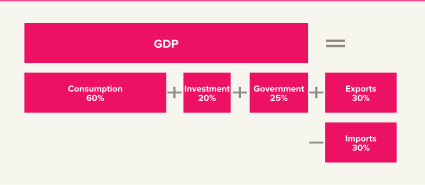
Stats NZ produces three official quarterly GDP measures: production GDP, based on industry-by-industry value-add estimates (the value of output minus consumption of intermediate goods and services), expenditure GDP, based on the total spending on final goods and services in the economy, and income GDP, based on the total flow of income in the economy. These 3 measures should be equal in theory, but practical measurement issues tend to produce slightly different numbers. While we favour the production measure for its accuracy and stability at an aggregate level, the expenditure measure breakdown is more useful for macroeconomic modelling. Figure 4.1 shows the breakdown of GDP into its expenditure components.
GDP data are produced quarterly but are only available with a 3 to 4 month lag, making it necessary for the Reserve Bank to ‘nowcast’ both the current quarter and the previous quarter’s GDP. More-timely indicators are available to help inform the Reserve Bank’s nowcasts for aggregate GDP, including ‘hard’ data from Stats NZ that include activity indicators, and ‘soft’ data from surveys. For example, regular business surveys from ANZ and NZIER provide useful information about firms’ own activity levels, as well as information about business confidence, capacity pressures, and employment. Many of the questions are forward-looking, providing some insight into firms’ expectations about the economy in the near future. In addition to these high-level soft-data indicators, the Reserve Bank has access to a large set of industry-specific activity indicators, such as monthly concrete sales, livestock slaughter, dairy production, and electricity production.
The Reserve Bank supplements these data with information gathered directly from businesses through our business visits programme. These visits are often targeted towards understanding specific industries but might also include discussions with broader entities such as local councils and iwi.
The following sections describe the various components of expenditure GDP, their key economic influences, and some of the data that help us understand these variables. Chapter 5 covers in more detail how these components are affected by monetary policy.
4.3.1 Consumption
Consumption is the largest component of GDP, accounting for about 60% of output. Consumption includes all household spending on final goods and services (goods and services that are not inputs into the production of other goods and services).
The Reserve Bank uses a range of data to help us understand consumption. At a high level, monthly data on electronic cards transactions can help nowcast current consumption. To understand consumption more fully and to develop a forecast, we look to the key economic factors influencing consumption, as outlined in table 4.1.
Table 4.1: Factors influencing consumption
| Factors | Channel | Indicators 54 |
|---|---|---|
| Labour incomes | Higher incomes allow households to consume more. | - Quarterly wage inflation - Total salary and wage earnings |
| Asset prices | Rises in asset prices may encourage people to spend by increasing household wealth. In New Zealand, housing is a particularly relevant asset class. Increased housing market activity is likely to support activity and consumption through increased construction and spending on furnishing, refurbishment, and real-estate services. House price inflation in New Zealand is highly correlated with consumption growth.55 | - REINZ monthly housing indicators, including house price inflation and house sales - CoreLogic quarterly house price inflation |
| Monetary policy and interest rates | Consumption is responsive to interest rates. The channels through which this relationship operates are described in detail in chapter 5. | Weekly fixed and floating mortgage rates and deposit rates from the 5 largest banks in New Zealand |
| Population growth | Aggregate consumption increases in line with the total number of people consuming goods and services. Immigration may provide an additional boost to spending due to the fixed costs incurred when immigrating, such as furnishing a house. | - Monthly migration statistics - Quarterly population estimates |
| Import and export prices | Export revenue affects domestic incomes, while import prices affect consumers’ purchasing power. | Monthly and quarterly trade statistics |
| Consumer confidence | Consumers who are more confident about the outlook for the economy save less and consume more. | Westpac McDermott Miller monthly consumer confidence survey |
4.3.2 Private investment
Private sector investment includes all fixed capital formation by private businesses (i.e. not the government) and constitutes about 20% of GDP. Private investment encompasses investment in a wide array of capital assets. This includes physical capital, such as residential and non-residential buildings, land improvements, transport equipment, and other plant and machinery. It also includes computer software and other intangible assets, such as those arising from research, development, and mineral exploration.
The factors influencing private investment are broad and varied, leading to occasionally asynchronous dynamics across different industries and capital assets.
Table 4.2: Factors influencing private investment
| Factors | Channel | Indicators |
|---|---|---|
| Capacity pressure | When demand for a firm’s goods or services increases above the firm’s capacity to supply them, the firm might choose to invest in order to increase production capacity. | - QSBO and ANZBO business surveys – factors constraining growth, investment intentions, and
difficulty finding labour - Reserve Bank business visits - The Reserve Bank’s output gap indicators |
| Business confidence and uncertainty | Firms with a positive outlook about the future economy expect stronger demand in the future, and are therefore more likely to invest. | - QSBO and ANZBO business surveys – confidence - Forecast dispersion, defined as variation between forecasts for the same variables by different forecasters - News media-based indicators of global and domestic uncertainty |
| Export demand | Exporting firms experience greater capacity pressure when export demand is strong. Increased export earnings provide more funds available for investment. | - Bloomberg commodity price data - Daily global commodity price measures from Bloomberg - Fortnightly Global Dairy Trade auction prices and volumes - Monthly and quarterly Stats NZ trade data, including prices and volumes - ANZ Commodity Price Index |
| House prices and sales | Rising housing demand incentivises residential construction. | - REINZ monthly housing indicators, including house price inflation and house sales - CoreLogic quarterly house price inflation |
| Cost of capital goods | Many investment goods are imported, so the exchange rate and global prices of capital goods affect business investment. | - Import prices - Exchange rates - Producer price index |
4.3.3 Government spending
Government spending consists of (a) government consumption on final goods and services, such as spending on ministries, defence, education, and healthcare, and (b) government investment, such as infrastructure construction and maintenance. On average, government spending accounts for about 25 percent of GDP.
When government spending increases, GDP is not expected to increase by the same amount. Government spending can support economic activity by boosting income and employment, which flows through to the rest of the economy. However, increases in government spending may also “crowd out” or reduce other private spending by driving up prices for scarce inputs, such as labour, capital, and materials. In addition, a proportion of government spending is on imports, which do not count towards GDP.56
The government may also influence the other components of GDP through changes in taxes and transfer payments (such as Jobseeker Support or Sole Parent Support). A change to taxes or transfer payments would not be seen in the government spending component of GDP. Instead, it would be seen primarily in the consumption and private investment components. For example, increasing current or expected taxation, or decreasing transfer payments, may reduce households’ disposable income, and therefore consumption. A change in taxes may also alter private sector investment by influencing the profitability of investment opportunities.
The Reserve Bank produces forecasts for government spending that directly incorporate forecasts from the New Zealand Treasury, with some statistical transformation and adjustments to account for differences in data specification and major government policy announcements.57 One exception is when a major domestic or international event disrupts the New Zealand economy between Treasury forecast rounds. For example, after the Christchurch and Kaikōura earthquakes, the Reserve Bank incorporated judgements about the likely implications into its forecasts based on consultation with relevant government entities.
Interactions with monetary policy
The government’s spending and taxation policies, collectively known as fiscal policy, are naturally less responsive to monetary policy compared to other sectors of the economy. However, fiscal policy can have a significant impact on demand in the economy, and ultimately inflation. The Reserve Bank takes government spending into account when assessing the economic outlook.
For example, when fiscal policy is expansionary and stimulates higher demand, tighter-than- otherwise monetary policy will usually be needed to achieve the Remit objectives. Fiscal policy settings can nevertheless support the objectives of monetary policy. For example, during an economic downturn, increased government spending and looser monetary policy can work simultaneously to stimulate demand.
Similarly, governments must have regard to the interaction between fiscal and monetary policy when formulating their fiscal strategy, as required under the Public Finance Act 1989. Given these interactions, a Treasury observer attends Monetary Policy Committee (MPC) meetings to facilitate co-ordination of monetary and fiscal policy and to support decision making, for example by sharing information on fiscal policy.
4.3.4 Trade
Trade is a significant part of the New Zealand economy. Imports and exports fluctuate over time, but trade has been broadly balanced in recent years, with imports and exports each representing about 30 percent of GDP.
New Zealand’s largest trading partners are China and Australia, with New Zealand typically exporting more than it imports from these countries (Table 4.3).
Table 4.3: Trade with New Zealand’s major trading partners in the year to March 2024 (nominal)
| Country | Import Share | Export Share | Share of Total Trade |
|---|---|---|---|
| China | 15% | 22% | 18% |
| Australia | 15% | 15% | 15% |
| United States of America | 10% | 15% | 13% |
| European Union | 12% | 6% | 9% |
| Japan | 5% | 4% | 5% |
| Singapore | 7% | 3% | 5% |
| South Korea | 5% | 3% | 4% |
| All others | 30% | 32% | 31% |
Exports
New Zealand is primarily a soft-commodity exporter, with agriculture, fishing, and forestry comprising around 37% of total exports in the year to December 2023. Dairy is the largest agricultural component, accounting for 18 percent of all exports. New Zealand’s dairy export prices and New Zealand dollar incomes are subject to considerable swings due to variable global demand and production, weather-related impacts on output, and exchange rate volatility.
Tourism and travel services are also major exports, accounting for roughly 12% of total exports as of December 2023, though this proportion was typically higher prior to COVID-19. Because these services are generally priced domestically, New Zealand dollar prices tend to be more stable. However, the volume of tourism and travel services consumed varies with the exchange rate and global economic cycles. Table 4.4 summarises the key factors influencing New Zealand’s exports and the data used to assess these.
Table 4.4: Factors influencing exports
| Factors | Channel | Indicators |
|---|---|---|
| Domestic export sector supply conditions | In the short run, commodity export volumes are largely determined by exporters’ supply capacity. This can be affected by domestic conditions such as drought and the availability of labour. | - Data on dairy production and livestock slaughter - NIWA Soil Moisture Anomaly data |
| Foreign demand | Commodity export prices are generally determined in global markets and are affected by global demand and the supply capability of foreign competitors. | - Daily global commodity price measures from Bloomberg - Fortnightly Global Dairy Trade auction prices and volumes - Quarterly Stats NZ overseas trade index statistics - ANZ Commodity Price Index - Monthly merchandise trade data |
| Exchange rate | A higher exchange rate reduces New Zealand dollar export incomes for a given global price. | Daily TWI and individual cross rates |
| Tourism | All spending in New Zealand by foreign visitors is counted towards exports. | - Billings acquired in New Zealand on cards issued overseas from the Reserve Bank Credit Card
Survey - Visitor arrivals |
Imports
Some proportion of what is consumed and invested in New Zealand comes from imports. In particular, New Zealand imports a majority of the manufactured durable goods it consumes, such as cars, electronics, and machinery. Petrol and other petroleum products are another key import and, like dairy, can have volatile prices.
Motor fuels are unique in that changes in global prices tend to be passed on to consumers almost immediately. While retailers of other imports tend to pass through price changes gradually, fuel retailers typically adjust prices daily or weekly in line with global oil prices. Table 4.5 summarises the factors influencing New Zealand’s imports and the data used to assess these.
Table 4.5: Factors influencing imports
| Factors | Channel | Indicators |
|---|---|---|
| Domestic spending | Some proportion of all consumption and investment in New Zealand is satisfied through imports. | Consumption and investment measures used to assess demand for imports |
| Foreign prices and the terms of trade | The proportion of spending directed towards imports depends on relative prices. Because New Zealand is small, imported goods prices are determined by global supply and demand. | - Daily global commodity price measures from Bloomberg - Quarterly Stats NZ overseas trade index statistics - Monthly merchandise trade data |
| Exchange rate | A higher exchange rate decreases the price of imports in New Zealand dollar terms relative to domestically produced goods. | Daily TWI and individual cross rates |
4.4 Potential output
Potential output is defined as the total output (usually measured in terms of GDP) an economy can produce using labour and capital at their maximum sustainable levels, given existing technology and the institutional features of the economy. It is an important input into the forecasting and modelling of generalised inflationary pressure, as will be discussed further in section 4.6. Conceptually, potential output depends on the size and skills of the labour force, available capital, and the level of technology or productivity.
4.4.1 Labour
Labour is the largest input into production in New Zealand. Stats NZ provides a quarterly estimate of the labour force as part of the Household Labour Force Survey (HLFS). Consistent with international standards, the measured labour force includes all people over the age of 15 currently resident in New Zealand who are either working (employed) or available and actively seeking work (unemployed).
The two factors that contribute to changes in labour availability are changes in the working-age population and changes in the labour force participation rate. Long-term trends, such as natural population growth, changes in average hours worked, or the increasing participation of women in the labour market, are also important, as are shocks such as large swings in net immigration.
4.4.2 Capital
Capital refers to the durable assets that are used in the process of producing goods and services, but which are not fully consumed during the process. Capital includes physical capital such as buildings and machinery, as well as intangible assets such as software (see section 4.3.2). Stats NZ produces an estimate of the stock of capital once per year as part of the annual national accounts, and this is the estimate used for modelling purposes.
Measuring an economy’s capital stock presents considerable challenges. Unlike GDP, which is a flow concept and is contained within a given measurement year, total capital is a stock estimate that accounts for all capital accumulated in years prior to the measurement period. It must also account for the depreciation of that stock over time, which depends on the type of capital and the intensity of usage.
Capital stock can be increased or decreased in response to changes in demand. When firms experience high demand and increased capacity pressure, they are encouraged to invest in more capital. Similarly, when demand is weak, incomes are lower and pressure on resources is low, firms may choose to hold back on investment and allow existing assets to depreciate. Sudden changes in capital stock can also occur, such as infrastructure damage due to natural disasters; however, the rate at which the capital stock adjusts is usually fairly slow.
4.4.3 Productivity
Total factor productivity is the efficiency with which capital and labour inputs are combined to produce goods and services. It is sometimes thought of as technology, but this is a simplification. While technological progress may be the predominant factor influencing productivity growth over time, productivity can also be affected by other factors, such as the matching of the right workers to the right jobs or the efficient allocation of resources to higher-value production.
Productivity is not directly observable and is difficult to define and measure. As a result, productivity estimates are calculated as a residual from other measurements. Once labour and capital inputs and aggregate outputs are measured, productivity can be calculated as output divided by inputs. Stats NZ provides official productivity estimates once a year. Given the need for timely estimates, productivity figures for forecasting purposes are constructed using statistical filters and internally estimated measures of capital and labour inputs.
4.5 New Zealand’s labour market
The labour market is an integral part of the economy and plays a crucial role in shaping inflationary pressures. Interactions between labour supply and labour demand contribute to labour market tightness, which influences wage growth. This section considers the labour market from three perspectives: labour supply, labour demand, and labour market tightness.59
4.5.1 Labour supply
Labour supply typically refers to the number of people working or actively looking for work at a given point in time in the economy. It encompasses the supply of people, their willingness to work, and the composition of skills within the labour pool. One key measure of labour supply is the labour force. As noted in section 4.4.1, the labour force is measured as the share of the population over the age of 15 that is either employed or available and actively seeking work. New Zealand’s labour force growth was more than twice the OECD average over the period from 2011 to 2022. This reflects both growth in the working-age population and an increase in the labour force participation rate.
Population increases can result from both natural increase (births minus deaths) and net immigration. Natural increase tends to be relatively stable and predictable, whereas net immigration can lead to more rapid and often unanticipated growth in labour supply, with implications for monetary policy. Similarly, a significant outflow of workers could cause the labour force to contract, although such outflows have been far less common in recent history.60
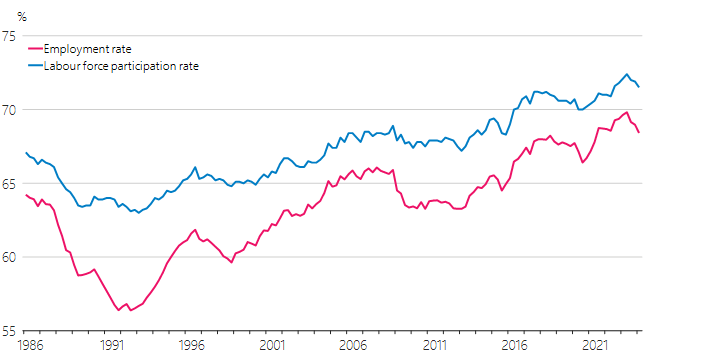
It is also useful to consider the ‘marginal labour force’ – those who are not participating in the labour market but could be induced to participate under tighter labour market conditions. The HLFS provides information about both underemployment – the share of part-time workers wishing to work more hours – and the ‘potential labour force’ – those who are either seeking or available for work, but not both (recall from section 4.4.1 that a person must be both available and actively seeking work to be defined as unemployed and therefore included in the labour force).
However, the HLFS does not capture those who are not available or seeking work but would make themselves available under certain conditions. For example, a stay-at-home parent might be encouraged to enter the labour force if they observe increased availability of jobs that are attractive and pay well. People outside of New Zealand might also be enticed to immigrate and join the labour force if offered sufficiently desirable job prospects. It is extremely difficult to measure or anticipate the impact of potential migrants on the labour market.
4.5.2 Labour demand and employment
Labour demand represents the desire and ability of employers to employ workers. One useful indicator of labour demand is the total number of people employed. Employment in New Zealand is measured in the Stats NZ HLFS as the total number of people in New Zealand over the age of 15 who are in paid employment, including those who are self-employed.61 Growth in employment is highly correlated with growth in GDP, as labour is the largest input to production.
Employment is often discussed in terms of the employment rate, which is the number of people employed as a share of the working-age population. New Zealand’s employment rate has been affected by both cyclical and structural factors. It has been climbing consistently since 2013 (figure 4.2) and has been among the highest in the OECD for some time.
Labour demand is a broader concept than that implied by the employment rate alone. For example, labour demand may also be reflected in the average number of hours worked per employee. Firms may also demand labour but fail to find suitable workers. Job vacancies provide some indication of excess labour demand, but the scope and quality of vacancy data are limited. In particular, vacancies advertised through the internet and social media are difficult to track, as some are published across multiple platforms while others are advertised only within private networks.
4.5.3 Labour market tightness and inflationary pressures
Labour market tightness reflects the pressure that labour demand places on the available supply of labour. When labour demand grows faster than labour supply, the labour market is said to be tightening. Monetary policy can have a significant effect on labour demand but has limited influence over labour supply.
Labour market tightness is also influenced by how easily the economy’s labour resources can be matched to firms’ labour demands. These factors are largely structural and beyond the control of the Reserve Bank. They include:
- how well the skills and geographic composition of the labour force align with employers’ needs;
- the efficiency with which employers and job seekers can find one another; and
- the efficiency with which labour resources can move between jobs.
Of particular importance to policymakers is how labour market tightness feeds into wage growth, a key cost of production for businesses. Inflationary pressures from wage growth arise primarily through the non-tradable sector, although labour market tightness is also closely correlated with overall capacity pressure, one of the main drivers of consumer price inflation. The concept of capacity pressure and its relationship with inflation are discussed further in section 4.7.
There are several indicators of labour market tightness. The most widely used official measure is the unemployment rate, defined as the percentage of the labour force that is not employed.62 However, the unemployment rate that delineates a tight versus loose labour market is not observable and can change over time, particularly as structural factors evolve.
As a result, the Reserve Bank also considers a broader range of indicators of inflationary pressures in the labour market and currently uses a suite of more than 40 measures. In addition to the unemployment rate, these include the job transition rate, the vacancy-to-unemployment ratio, and business survey measures of the extent to which labour is a factor limiting production.63
To better understand how labour market tightness affects inflation, close attention is paid to wage growth, which is an important determinant of household incomes and firms’ costs. There are two main sources of information on wage growth in New Zealand: average hourly earnings from the Quarterly Employment Survey (QES) and the Labour Cost Index (LCI).
When measuring wage inflation, attention is typically focused on the adjusted LCI, which controls for changes in the quality and quantity of work performed. However, as an index, the LCI does not provide a dollar measure of wages and salaries, so it is supplemented with the QES, which is measured directly in New Zealand dollars. Different QES measures provide insight into both total income, which is affected by labour market flows and hours worked, and hourly earnings.
4.6 Capacity pressure
Capacity pressure reflects the balance between demand for goods and services and the economy’s ability to supply them. It is a key influence on inflation over the business cycle. At the Reserve Bank, capacity pressure is most commonly considered in terms of the output gap, defined as the difference between actual GDP and potential output.
Potential output and the output gap are not directly observable and must therefore be estimated. Because GDP is measured by Stats NZ, only one of potential output or the output gap needs to be estimated, as one implies the other.
There are 3 main approaches used to estimate potential output and the output gap:
- To estimate potential output directly, data on capital, labour, and productivity are combined in a production function derived from economic theory. To generate a smooth and slow-moving estimate, time series techniques are applied to derive trend estimates for each input.
- To estimate the output gap directly, information from a wide range of capacity pressure indicators is combined. These include measures of unemployment and labour underutilisation, business survey measures of capacity pressure, and models linking capacity pressure to variables such as inflation and business investment. This collection of measures is referred to as the output gap indicator suite.64
- To estimate potential output and the output gap simultaneously, time series filtering techniques are applied directly to GDP data. These methods decompose GDP into a trend component (potential output) and a cyclical component (the output gap).
Each approach has its own strengths and weaknesses. In practice, estimates of capacity pressure are formed using a combination of all three methods.
4.7 Inflation
The Remit directs the MPC to target inflation in terms of the All Groups Consumers Price Index (CPI). This index measures changes in prices for a representative basket of goods and services purchased by New Zealand households65.
The basket is updated over time to represent changes in consumer behaviour. It includes about 700 goods and services, such as apples, petrol, haircuts, university fees, life insurance, rent, and the purchase of new housing. It does not directly measure changes in asset prices, such as company shares or house prices, because these are for investment purposes rather than consumption.
4.7.1 Measuring inflation
CPI inflation is published by Stats NZ at a quarterly frequency. In most advanced economies, inflation data are produced monthly. Between quarterly publications, we have some high frequency price data to inform inflation nowcasts.
Since November 2023, Stats NZ has begun publishing more monthly CPI indicators. This means that although we do not have a monthly CPI in New Zealand, there are now indicators for approximately 45% of the inflation basket, including food, rent, and fuel.
The Reserve Bank often uses a split of the CPI basket into tradable and non-tradable components (figure 4.3). Tradables are goods and services that are imported or that are in competition with foreign goods and services, either in domestic or foreign markets. These include fuel, food, and electronics.
Non-tradables are goods and services that do not face foreign competition, such as public transport, dental services, and electricity. We use this distinction because tradables and non-tradables respond to different macroeconomic influences.
Non-tradables inflation is more directly influenced by capacity pressure in the New Zealand economy, whereas tradables prices are heavily influenced by global factors. Monetary policy can nevertheless influence the domestic price of tradables goods and services by affecting the exchange rate and by influencing the cost of the domestic inputs into non-tradables goods and services (such as transport, storage and sales).
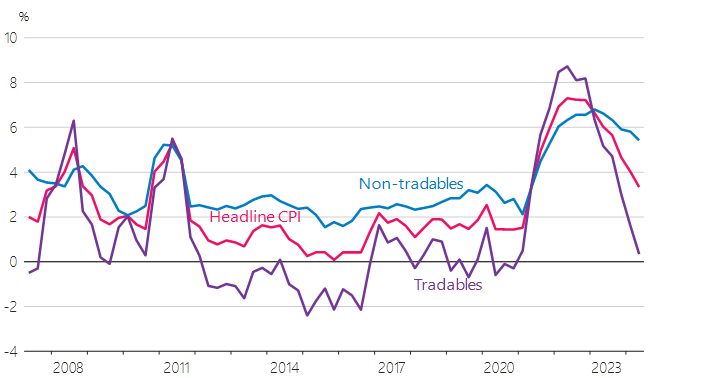
4.7.2 Core inflation
Capacity pressures and inflation expectations are not the only factors influencing inflation. For example, swings in the prices of imported consumer goods can affect inflation independently of changes in capacity pressure. Tax changes, such as changes to Goods and Services Tax, or excise taxes on tobacco, alcohol, or petrol, also have a direct and sometimes large impact on measured inflation. These factors are often transitory in nature and do not necessarily require a monetary policy response.
‘Core inflation’ represents underlying pricing pressures that are likely to persist once temporary shocks have unwound. The Reserve Bank looks at a set of measures that use various techniques to strip out the more volatile component of inflation to provide estimates of core inflation (figure 4.4). There is no single ‘best’ method, with each having its strengths and weaknesses.
Some measures exclude certain more volatile groups, such as food and energy, while others use statistical methods that are less influenced by particularly large price changes for individual items or that measure only the least volatile groups. Other methods have stronger theoretical grounding. These measures help us look past some idiosyncratic or one-off price movements66.
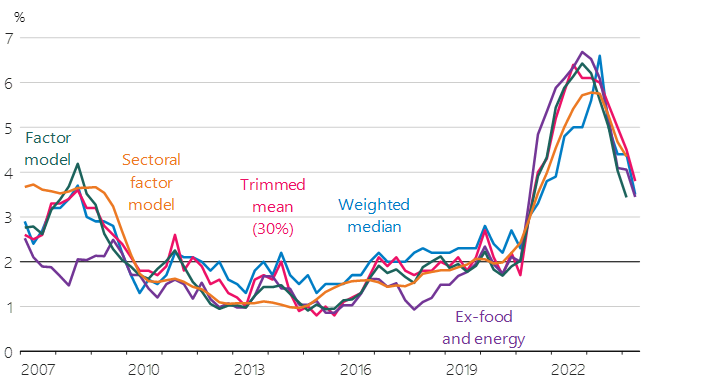
4.7.3 Inflation expectations
As discussed in section 4.2, expectations about future inflation play an important role in determining inflation, because households and firms reflect their expectations in their price- and wage-setting decisions. They can also provide insight into whether households, firms, and financial market participants believe the Reserve Bank will meet its inflation objective (see chapters 2 and 3).
Inflation expectations cannot be measured directly, but there are a number of ways they can be estimated. Estimates of inflation expectations in New Zealand generally fall into three categories: survey-based measures, financial market-based measures, and model-based measures. Overall, we monitor about 20 measures across various horizons. Sometimes, different measures tell different stories, and each has their own benefits and drawbacks67.
4.8 Shocks
There will always be unforeseen events that impact the economy and ultimately influence inflation outcomes. We call these ‘shocks’. We cannot predict when a shock will arise and what its impacts will be. However, it is important that we understand the nature of shocks that can occur and, when they do arise, that we understand how they will transmit through the economy.
Shocks to the New Zealand economy come from a range of sources, influenced by the characteristics of the economy, and New Zealand’s geography. One key source of shocks is the international environment. As a small open economy, New Zealand’s exposure to international shocks is particularly strong.
These shocks may occur in many countries simultaneously or may originate in one country and spread to others. Spikes and slumps in the global price of oil, altering the cost of production for manufacturers and the price of fuel, generally affect many countries simultaneously. Whereas the Global Financial Crisis (GFC), originating in US financial markets before quickly transmitting to foreign financial markets, is an example of a shock sequentially spreading to New Zealand.
International shocks transmit to the New Zealand economy through three major channels: trade (via exports and imports), financial markets (via interest rates and the exchange rate), and global uncertainty (via business and consumer confidence). International shocks can also impact migration flows. A shock may pass through any combination of these channels and interact to produce compounding effects68.
Shocks can also arise domestically. Natural disasters and droughts or severe weather events can cause major disruption to the economy, particularly given New Zealand’s role as a primarily soft-commodity exporter. Changes in government policy, such as regulation or spending, can also be a source of domestic shocks.
It is important to attempt to understand the nature of a shock when it occurs, as this will influence the appropriate response of monetary policy. One important consideration is whether the shock is a demand shock or a supply shock. As discussed in chapter 2, demand shocks have the same directional impact on activity and inflation, whereas supply shocks affect activity and inflation in opposite directions – which can create trade-offs for monetary policy.
Any given shock can have both demand and supply impacts. Shocks that have a strong demand impact include unexpected changes in fiscal stimulus, export prices, or consumer confidence. An example of a supply shock would be a large change in oil prices, or disruptions to the supply of goods from abroad, such as those seen after COVID-19.
Natural disasters can often have both supply and demand impacts: an initial supply shock as capital is destroyed and production is disrupted, but a demand shock in the years beyond as lost capital is replaced.
Other factors may also influence the appropriate monetary policy response to a shock, such as the speed, duration and strength of the shock, and the sectors it affects. For example, a shock that will have a persistent impact on inflation may have more significant consequences for monetary policy than a shock that will only have a short-lived impact.
In practice, it can be difficult to identify the precise nature of shocks as they arise. Some shocks are large and complex, with impacts that are difficult to predict. COVID-19 and its associated supply-chain shock, the Canterbury and Kaikōura earthquakes, and the GFC are all examples of large unforeseen shocks where the probable impact was also unknown69.
Our modelling frameworks attempt to capture shocks as they occur. We also apply expert judgement and model overlays to our forecasts to incorporate our best assessment of the likely impacts of shocks as they arise. However, we cannot resolve the inherent uncertainty about the nature of shocks that have arisen or may arise in the future. Instead, this uncertainty must be reflected in the process for formulating monetary policy (see chapter 3).
4.9 Data
To assess the outlook for New Zealand’s economy, we must have a good understanding of conditions in the economy today.
To form this assessment, we rely on data from a range of sources. However, data are usually published at set frequencies (e.g. monthly or quarterly) and sometimes with a considerable delay following the period to which the data relate.
Sometimes this necessitates the production of ‘nowcasts’: rather than forecasting, which looks ahead into the future, we look at past and current (but incomplete) data to understand what the economy is doing today and to form a ‘starting point’ on which to base our forecasts.
Even when data are available, there can be considerable challenges in interpreting it. Data can be noisy, in some cases owing to significant measurement challenges. Some data are also subject to seasonal patterns that may not be stable over time.
It can therefore be challenging at times to identify the useful signals about the economy that are contained within the data and separate out the noise and seasonal fluctuations.
Revisions to past data can occur long after the data’s initial release and can significantly alter our understanding of the economy. Revisions can arise as data providers, such as Stats NZ, incorporate new information, update their methods, or update their understanding of regular seasonal patterns.
The CPI is not typically revised, but national accounts data, such as GDP, can be subject to material revision.
4.10 Macroeconomic forecasting frameworks and models
The Reserve Bank uses economic models to pull together and interpret the wide range of data and economic concepts. These models can help predict, simplify, and explain the way the economy works, and the likely impact of monetary policy decisions. They are also used to generate counterfactuals and alternative scenarios for understanding possible outcomes in an uncertain world.
Choosing an economic model involves trade-offs in terms of detail, simplicity, precision, forecast performance, the reflection of beliefs about how the economy works, and practical workability. When selecting models to support our analysis, we need to choose models that are fit for purpose.
In many cases we rely on suites of models to assess a particular issue, rather than individual models. This reflects that each model has strengths and weaknesses.
Our overarching forecasting framework is based around a core model that can be used to communicate our understanding of the economy, and is flexible enough to incorporate off-model information. However, we augment the core model with other models, some of which provide depth and detail to the core projections, while others are used for cross-validation and testing.
NZSIM is the Reserve Bank’s core monetary policy model. We use NZSIM to produce most of the macroeconomic projections published in the MPS, as well as the forecasts that provide a baseline for our own internal analysis and discussion. NZSIM is a structural model, which means that the relationships between different parts of the economy are based on what we think are practical and reasonable assumptions about the way firms and households interact.
It is more ‘theory driven’ than ‘data driven’. Data are used to calibrate and estimate the model, but the mechanics are underpinned by economic theory.70
Chapter 5: Monetary policy transmission in New Zealand
5.1 Introduction
Monetary policy operates in a large part through a simple principle: higher interest rates tend to lead to lower output, employment and inflation than would otherwise be the case; for lower interest rates, the opposite is true. However, underlying this simple relationship is a complex transmission mechanism, whereby interest rates influence the economy through different channels and across varying time periods. This chapter describes some of the key channels through which monetary policy operates.
This chapter focuses on transmission of the Official Cash Rate (OCR), the Reserve Bank’s primary monetary policy tool. Chapter 6 discusses the OCR mechanism in more detail, as well as the Reserve Bank’s other monetary policy tools. Many of these other tools share large parts of the transmission channels discussed in this chapter.
5.2 Monetary policy transmission in a nutshell
The main way the Reserve Bank formulates and implements monetary policy is by setting the level of the OCR. The OCR influences the interest rates faced by households and businesses in the economy, which in turn influence their behaviour.
The responses of households and businesses determines activity, capacity pressure, and ultimately inflation. Figure 5.1 is a stylised representation of this process.

Changes in the OCR take a significant amount of time to have their full effect on inflation. Figure 5.2 provides a more detailed illustration of how a change in the OCR (in this case an increase, as indicated by the upwards-facing arrow in the OCR box) flows through key parts of the economy.71
Even figure 5.2 is an extreme simplification of the monetary policy transmission mechanism. In particular, it does not describe feedback loops and secondary effects. The remainder of this chapter describes the channels in more detail, providing some insight into the key areas of uncertainty, and putting the channels into the context of our internal forecasting framework and models.
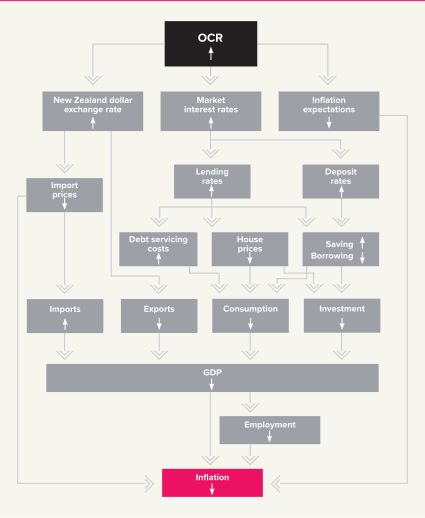
5.3 The key channels of monetary policy transmission
Underlying the simple representations in figures 5.1 and 5.2 are several distinct channels through which monetary policy influences inflation. As figure 5.2 suggests, these channels operate simultaneously and have many interdependencies. Monetary policy affects inflation through five key channels:
- Savings and investment
- Cash flow
- Household wealth
- The exchange rate
- Inflation expectations
5.3.1 Transmission to interest rates across the economy
To influence activity, changes to the OCR need to pass through to the market interest rates faced by households and businesses, such as mortgage and deposit rates. The OCR has its most direct impact on short-term interest rates in wholesale financial markets (see chapter 6). However, many of the interest rates faced by households and businesses are longer term, such as fixed mortgage rates, or yields on corporate bonds. Activity, employment, and inflation are influenced by the set of interest rates across all maturity horizons, known as the yield curve.
The yield curve, in turn, is influenced by the expected future path of short-term interest rates. For example, the interest rate that a bank is willing to lend at over a five-year horizon will be influenced by the interest return the bank would expect to earn by making a series of short-term loans over five years. The same thinking applies across a broad range of financial markets, such as the corporate and government bond markets. Because of this, the Reserve Bank can affect market interest rates by changing the OCR today, or by changing expectations about the future path of short-term interest rates through its communications.72
Expectations about future interest rates develop in response to all kinds of economic news, and not only in response to monetary policy announcements. People’s expectations about future interest rates already include expectations about future monetary policy. For this reason, a change in the OCR will not necessarily be matched by moves in interest rates across the yield curve on the day of announcement. In fact, market interest rates might not move at all if market participants have already perfectly predicted the move. In some circumstances, market rates might move in the opposite direction of the rate change if it is interpreted as being accompanied by sufficiently strong and credible communication to that effect. This is why the Reserve Bank’s communications about intentions for the future path of the OCR, and the economic assumptions that this path is based on, are a key element of monetary policy.
Other factors also influence the interest rates faced by households and businesses. Lending and financial investment often entail risks, which lenders and investors usually require compensation for in the form of higher interest rates. This is known as a risk premium. One important risk premium is the term premium, which is the compensation lenders and investors require for locking in a fixed interest return over a period of time. Interest rates can also factor in other risks, such as the risk that the borrower defaults on a loan (reflected in a credit risk premium), which can vary depending on the borrower. Risk premia are influenced by investors’ and lenders’ perceptions of the risks involved in a transaction, as well as their appetites for bearing that risk. Risk premia can therefore vary over time as risk appetite and uncertainty change, affecting the shape of the yield curve.73
Other frameworks can also help us to understand interest rates. When considering interest rates on loans offered by banks and other financial institutions, it can be useful to consider them in terms of two components: banks’ funding costs and a markup. These components are influenced by monetary policy and risk premia, but they also reflect other factors (see box A).
One important implication is that a wide range of factors other than monetary policy can influence interest rates. As New Zealand is integrated into global financial markets and banks use offshore funding, developments in both domestic and global financial markets can have a significant impact on interest rates in New Zealand. For example, investor risk sentiment, investor preferences, and conditions in global funding markets can all have a significant impact. The OCR does not have a direct influence over these factors, but it can be adjusted in response to them to ensure that interest rates in New Zealand remain at levels consistent with achieving the Remit objectives.
Nominal and real interest rates
The OCR and the interest rates quoted to households and businesses are nominal interest rates. However, it is the real interest rate – the nominal rate less inflation or inflation expectations – that determines the actual return to investment and the cost of debt.74 This is because, rather than being a true return or cost, part of the nominal interest rate merely compensates lenders for changes in purchasing power that arise from inflation.
When inflation and inflation expectations are relatively stable, a change in the nominal interest rate is roughly equal to a change in the real interest rate by the same amount. However, at times, changes in inflation or inflation expectations can materially influence the real interest rates faced by households. In these situations, the OCR may need to be set higher or lower than otherwise to achieve the desired stance of monetary policy.
Box A: Interest rates on retail loans
The main interest rates faced by New Zealand households and firms are those offered on loans and deposits by banks and other financial intermediaries. It is therefore important to understand the factors that influence these retail interest rates. We tend to decompose interest rates on bank loans into two components: banks’ funding costs (further split into ‘swap rates’ and a ‘funding spread’) and a markup that banks charge on top of this.
Banks’ funding costs
Swap rates
A key reference interest rate used to assess bank funding costs is the 90-day Bank Bill Rate (‘BKBM’). This rate roughly represents the rate at which banks can borrow for 90 days in wholesale financial markets, and is primarily influenced by expectations of the level of the OCR over the 90‑day period.
As the interest rates on many bank loans are fixed for longer horizons, such as two years, the 90-day Bank Bill Rate is not always the best like-for-like reference rate. Instead, the rates available on interest rate swaps provide a more appropriate benchmark for the funding costs banks can lock in over longer horizons.
Interest rate swaps are financial derivatives that allow banks to swap a variable flow of interest payments for a fixed flow of interest payments. The 2‑year swap rate, for example, roughly represents the rate a bank could lock in via a strategy of (a) rolling over 90‑day funding every 90 days for 2 years and (b) using a 2‑year interest rate swap to convert the uncertain interest payments into a fixed stream of payments. Reflecting this, fixed‑term bank lending rates move closely with changes in swap rates (figure A1).
Figure A1: 2-year swap and mortgage interest rates
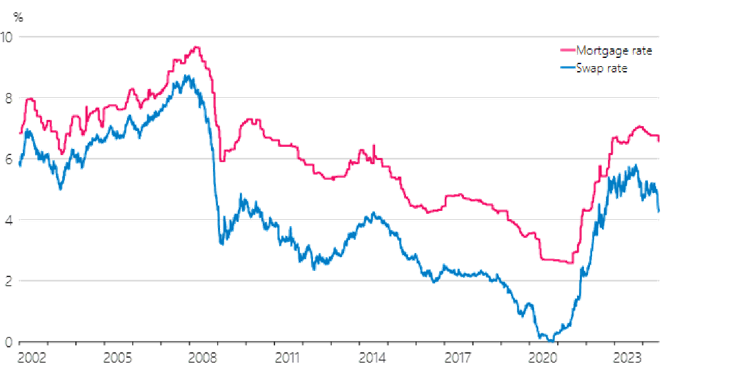
Source: Bloomberg, Interest.co.nz, RBNZ estimates.
Swap rates are heavily influenced by expectations of the 90-day Bank Bill Rate over the life of the contract. They are therefore the main component of banks’ funding costs influenced by the OCR and the OCR outlook. Swap rates also include a term premium, which represents the additional premium borrowers are willing to pay in order to lock in an interest rate over some time horizon.76 The term premium is influenced by the demand and supply of fixed-rate financial products, which in turn is influenced by the preferences of borrowers and savers/investors.
Funding spread
Banks fund their operations through a range of sources. On average, nearly two thirds of banks’ funding comes from deposits in the form of transactional, savings and term deposit accounts. They also source funding via debt securities issued into domestic and offshore wholesale financial markets. This ranges from short-term wholesale funding (e.g. 3-month bank bills) to long-term wholesale funding (e.g. 5-year bonds). When funding in foreign currencies, banks hedge their exposure to foreign exchange risk.
We typically consider the cost of different sources of funding by considering the cost of that funding relative to the appropriate swap rate (‘the funding spread’).78 The overall funding spread will reflect the compositional make-up of banks’ funding.79
The funding spread depends on the demand for and the supply of different types of funding, and competition in funding markets. Banks are often willing to pay more for funding that is committed for longer periods (a ‘term funding premium’) or is less prone to being withdrawn.80 The spread will also reflect the risk faced by those providing the funding, the services bundled with the product (e.g. transactional accounts), and other factors. The funding spread can move sharply in response to changes in risk sentiment in domestic and international financial markets, as well as changes in the cost of hedging offshore funding.
Markup
Banks’ lending interest rates include a markup over their funding costs. In part the markup covers other costs, such as operating costs or the losses banks might incur if borrowers default on their loans. It also includes a profit margin for the banks’ shareholders, who provide the banks’ equity funding. The markup varies across different types of loan, partly reflecting differences in operational costs and riskiness.
5.3.2 The saving and investment channel
Changes in interest rates impact the incentives for firms and households to consume, save, and invest. When households and businesses see interest rates that vary over time, they respond by varying their consumption and investment behaviours to take advantage of low borrowing rates and high deposit rates. We call this effect ‘intertemporal substitution’.
When the OCR increases, households and businesses are encouraged to save and discouraged from borrowing. This reduces household consumption, investment in new houses and renovations, and businesses’ investment in physical capital such as plant and machinery. This lowers the overall level of activity in the economy, easing capacity pressures and, in turn, reducing employment and inflation (figure 5.3).
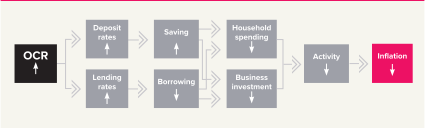
The initial increase in saving and reduction in investment has compounding effects. Because consumers are spending less, businesses face lower demand and weaker profits. Subsequently, their appetite to employ labour is reduced, suppressing overall income across the economy and further reducing spending and activity. Weaker demand and higher borrowing costs discourage firms from investing too, further reducing aggregate spending in the economy.
It takes some time for these impacts to take full effect, as some factors slow the pass-through from higher interest rates to activity. For example, in the short term, a firm is unlikely to pull back on long-term investment projects that have already been started in response to a change in interest rates, but they may pull back on smaller near-term investment purchases.
The intertemporal substitution effect is a powerful channel in NZSIM, the Reserve Bank’s main economic model. Our model assumes that consumers adjust their consumption in response to cyclical fluctuations in interest rates – an assumption that fits the New Zealand economic data relatively well. However, it takes some time for this channel to work its way through the economy. In our model, and consistent with our assessment of past experiences, it takes up to two years for the peak impact of a change in the OCR on inflation to be reached, although the peak impact on economic activity is likely to occur earlier.81
5.3.3 The cash flow channel
The impact of interest rates on cash flow also affects the transmission of monetary policy.82 Some households and businesses respond to changes in interest rates beyond the saving and investment channel, particularly if their access to credit is constrained. For example, a household with relatively high debt and relatively little disposable income would find that an increase in interest rates increases their weekly debt repayment obligations and might force them to reduce their spending. For these households, the higher debt repayments could force a greater response to a change in interest rates than intertemporal substitution alone.
The opposite effect would be true of net savers, whose interest income is boosted by higher interest rates. In this case the cash flow channel works in the opposite direction to the saving and investment channel. This dampens the overall size of the cash flow channel. However, because New Zealand is a net debtor nation, the aggregate effect of the cash flow channel is still likely to be negative for activity and inflation when interest rates increase (figure 5.4).
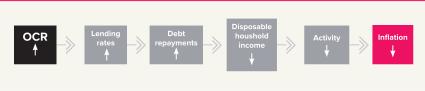
Our core model does not differentiate between net savers and net borrowers, or households and businesses that are or are not credit constrained. This means that the cash flow channel is not explicitly captured in our model, but rather is accounted for by a larger intertemporal substitution effect, calibrated to New Zealand data.
5.3.4 The household wealth channel
Changes in interest rates can have a direct effect on household wealth. For New Zealand, housing represents more than two-thirds of households’ total wealth. Higher interest rates reduce demand to purchase houses, reducing overall activity and constraining house price inflation. When house price inflation slows, people may revise lower their perceived wealth and, as a result, decrease their consumption. This is known as a ‘wealth effect.’
The wealth effect is also supported by a ‘collateral effect’ whereby smaller increases in housing equity from capital gains limit how much households can borrow against their homes to finance consumption. Reserve Bank research (Wong, 2017) found that households in New Zealand do indeed vary their consumption in response to changes in housing wealth. However, this work suggests that the propensity of households to consume out of housing wealth has been lower following the GFC than in the period prior to the GFC.
In NZSIM the correlation between changes in house prices and changes in consumer spending is incorporated into the model’s consumption function. As a result, all else equal, higher interest rates slow house price growth, thereby slowing growth in consumption (figure 5.5).
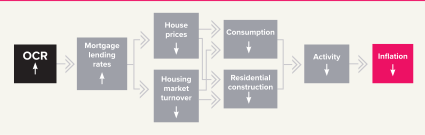
5.3.5 The exchange rate channel
Higher domestic interest rates relative to foreign interest rates cause the New Zealand dollar exchange rate to appreciate and thereby lower inflation. This condition holds for any NZD cross-rate, but we generally discuss the exchange rate in terms of the New Zealand dollar trade-weighted index (TWI). Reserve Bank research (Wong and Cook, 2012) shows that both actual and expected changes in the OCR have statistically significant impacts on the TWI.
In one study, changes in the OCR accounted for about 30% of the variation in the exchange rate for a short sample period, suggesting that other domestic or overseas developments were a greater source of volatility in the exchange rate during that time. For example, commodity prices and global risk appetite are also important determinants of the New Zealand dollar exchange rate.83
When the New Zealand dollar exchange rate rises, the cost of imports falls in New Zealand dollar terms. These lower prices feed through directly to lower tradables inflation. Further, lower import prices encourage domestic spending on imports relative to spending on domestic goods, dampening economic activity and inflation (figure 5.6).
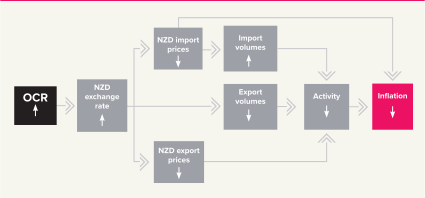
A higher exchange rate also reduces export incomes, though the driver of this effect differs depending on whether an export good or service is priced in New Zealand dollars or foreign currency. When exports are priced in foreign currency, such as dairy exports priced in US dollars, incomes will be lower in New Zealand dollar terms (assuming export volumes remain roughly the same). On the other hand, when prices are set in New Zealand dollars (as is typically the case for service exports like tourism and education), they become less competitive internationally, and the quantity demanded will fall, also reducing incomes.
The response of the exchange rate to monetary policy surprises is more or less immediate, and some prices, such as petrol prices, may respond very quickly (as discussed in chapter 4). However, it takes some time for the effect of exchange rate movements to trickle through to domestic retail prices and activity due to fixed contracts, hedging, planned investment, and the delay between wholesale import and retail sales.
In NZSIM, it takes more than a year for the full impact of a change in the exchange rate to pass through to the import and export sectors. Exchange rates are notoriously difficult to forecast, in part due to the important influence of international factors. But exchange rates are also a very important factor for inflation. Unexpected developments in the exchange rate are a common reason why tradables inflation evolves differently than forecast, and so we believe that it is important for us to be explicit about the exchange rate on which our economic projections are predicated. However, we tend to think of and communicate our projection for the TWI as an ‘assumption’ rather than a ‘forecast’ to acknowledge the uncertainty inherent to the exchange rate outlook.
5.3.6 The inflation expectations channel
Inflation expectations affect the transmission of monetary policy because near-term inflation expectations (up to two years ahead) directly impact actual inflation by altering businesses’ price-setting behaviour. Most businesses understand that higher interest rates generally lead to lower inflation therefore, when the Reserve Bank changes monetary policy, price-setting firms are able to adjust their inflation expectations immediately in response. Section 4.7.3 explains this process in more detail.
Beyond its direct role in monetary policy transmission, longer-term inflation expectations indicate whether the MPC’s target is viewed as credible (as mentioned in section 1.3.2).84 Near-term inflation expectations are influenced by known business cycle developments. For example, when the economy is in recession, market participants might expect a period of low inflation. However, if the market is confident that the Reserve Bank can bring inflation to target over the medium term, then inflation should be expected to return to target in the long run.
5.4 The neutral interest rate
One analytical tool we use to understand the impact of a given level of the OCR on the economy is the ‘neutral interest rate’. The neutral interest rate is conceptually the rate that, on average over time, would be consistent with no over‑ or under‑utilisation of resources and stable inflation.85 When the OCR is above the neutral interest rate, monetary policy is said to be contractionary, leaning against inflationary pressure. When the OCR is below the neutral interest rate, monetary policy is said to be stimulatory, supporting economic growth and employment, and adding to inflationary pressure.
The neutral interest rate is unobservable and subject to change over time. It depends on a range of global and domestic factors, including demographics and productivity growth, as well as households’, businesses’ and governments’ attitudes towards savings and investment. The neutral interest rate can be expressed in either real (inflation‑adjusted) or nominal terms.
We use a range of techniques for estimating the neutral interest rate, but these estimates are surrounded by considerable uncertainty. We tend to assume that the neutral interest rate evolves only gradually, but over periods of years movements in neutral rates can be significant – we estimate that the neutral OCR in New Zealand has declined by more than 200 basis points since 2008.86
5.5 Risks and uncertainty
One caveat for this chapter is that the effects we describe should always be accompanied by “all else equal”. Many uncertain economic factors may alter or override the transmission of monetary policy.
As discussed in chapter 4, the economy is subject to unexpected shocks that can influence economic activity and inflation. These shocks can work against the outcomes monetary policy is trying to achieve and, in some cases, may alter the strength and timing of monetary policy transmission.
There is also significant uncertainty surrounding the transmission of monetary policy itself. Monetary policy’s transmission through the economy is far more complex than our models can capture. Because we assess the economy and the monetary transmission mechanism mainly through aggregate data, small shifts in the composition of key economic variables can have unanticipated consequences. Importantly, the relative strength of different transmission channels, and the speed at which monetary policy influences the economy, are uncertain and are likely to vary through time as the economy changes.87
Risk and uncertainty are unavoidable. The consequence of uncertainty is that outcomes for activity, employment, and inflation in the economy are never exactly as predicted. For this reason, uncertainty and any key identifiable sources of risk are factored into monetary policy strategy, as discussed in chapter 3.
Chapter 6: Monetary policy tools
6.1 Introduction
The Reserve Bank has a range of monetary policy tools (or policy instruments) it can use to influence the economy.
The Reserve Bank’s primary monetary policy tool is the Official Cash Rate (OCR). However, the MPC can also use other policy tools in combination with the OCR in pursuit of its Remit objectives. This was highlighted during the COVID-19 pandemic, when the MPC supplemented a low OCR with Additional Monetary Policy (AMP) tools, including a Large Scale Asset Purchase (LSAP) programme and a Funding for Lending Programme (FLP), in order to stimulate the economy. The Reserve Bank has also used foreign exchange intervention in the past to influence the exchange rate.
Use of policy tools other than the OCR has generally only been considered when the OCR has been near its effective lower bound (ELB) or where a combination of tools might lead to better outcomes for the MPC’s objectives. As such, the OCR remains the Reserve Bank’s primary monetary policy tool.
This chapter provides a brief outline of the main monetary policy tools considered by the Reserve Bank, the arrangements that govern the choice of tools, and the implications for the Reserve Bank’s balance sheet. Most of the tools influence interest rates, and therefore share large parts of the transmission channels discussed in chapter 5. Details on the precise mechanisms of transmission of each tool and the Reserve Bank’s experiences using them are left for further reading.88
6.2 The Reserve Bank’s monetary policy tools
6.2.1 Official Cash Rate (OCR)
The OCR is an overnight interest rate that is set by the MPC. It is an important reference rate to which the Reserve Bank’s short-term liquidity operations are benchmarked, and it determines the interest rates that apply to lending and borrowing between the Reserve Bank and commercial banks. The Portfolio Management team at the Reserve Bank is charged with ensuring that overnight interest rates in wholesale financial markets trade close to the OCR.89 By influencing short-term interest rates in financial markets, the OCR ultimately influences the interest rates faced by households and businesses.
The OCR framework was introduced in 1999 and was the culmination of a gradual move towards targeting financial market prices rather than quantities.90 Prior to the establishment of the OCR, the implementation of monetary policy focused on influencing the quantity of settlement cash – the level of deposits held by banks at the Reserve Bank – in order to influence the broader economy.
The OCR’s role as the Reserve Bank’s main monetary policy tool reflects that it has a broad impact on the economy, it can be adjusted easily with minimal implementation costs, and it is simple, well understood, and easy to communicate. Policy interest rates like the OCR are also the primary monetary policy tools of most advanced economy central banks.
Expectations and forward guidance
As discussed in chapter 5, expectations about the future path of the OCR can have a significant impact on the interest rates faced by households and businesses. The MPC regularly influences these expectations by providing signals about the outlook for the New Zealand economy, the future path of the OCR, and how that might change as economic conditions evolve. As part of this, the Reserve Bank usually publishes an ‘OCR track’ in its quarterly Monetary Policy Statements, which indicates a forward path of the OCR that is consistent with the Reserve Bank’s economic projection.
At times, the MPC may wish to provide particularly explicit guidance or a commitment around the future level of the OCR, in order to have a more powerful impact on expectations. For example, in 2020, the MPC committed to keeping the OCR at the low level of 0.25 percent for one year. Such policies are referred to as ‘forward guidance’. In addition to time-based forward guidance (such as that used by the MPC in 2020), central banks can also use outcome-based forward guidance (such as committing to not raising the OCR until CPI inflation is above a certain level). While forward guidance can be used at any time, stronger forms of forward guidance tend to be most common when central banks are facing limits on how much they can lower their policy interest rates.
Effectiveness at low and negative levels
Several central banks globally have lowered their policy interest rates to negative levels in order to stimulate their economies. Similarly, the Reserve Bank can lower the OCR to a negative level if needed to support the Remit objectives. This follows work in 2020 and 2021 to prepare the banking system for the possibility of a negative OCR.91
However, there will be a limit as to how far the OCR can be lowered into negative territory before its effectiveness as a monetary policy tool diminishes. This is known as the effective lower bound (ELB) problem. One important limitation stems from the ability of households, businesses, and financial institutions to earn a zero percent nominal return by holding physical currency. While there are storage and security costs associated with holding physical currency, this issue could become relevant if interest rates were sufficiently negative. In such a situation, the transmission of further reductions in the OCR to the financial system and broader economy could become diminished.
Another factor that can diminish transmission of the OCR at low or negative levels is a perception that depositors are culturally averse to low or negative deposit rates. This may discourage banks from lowering deposit rates as much as they otherwise would in response to a decline in the OCR, which may lessen the flow-through to the deposit and lending rates faced by households and businesses.
There is significant uncertainty as to how far below zero the OCR can be lowered before these ELB issues become significant. However, there is likely to be room for the MPC to provide material monetary stimulus by lowering the OCR to negative levels.
6.2.2 Large scale asset purchase (LSAP) programmes
Another monetary policy tool that has been used in New Zealand and abroad is large scale asset purchase (LSAP) programmes, often referred to as quantitative easing (QE). LSAP programmes involve the purchases of significant quantities of financial market assets with the aim of stimulating the economy. While the Bank of Japan has used such policies since 2001, they became more prevalent internationally following the Global Financial Crisis and were adopted by many central banks following the COVID-19 pandemic.92 In their most typical form, they involve purchases of government bonds in the secondary market, although similar programmes abroad have included a wider array of financial assets.
LSAPs work primarily by reducing yields (interest rates) on government bonds. They do this primarily by reducing the term premium (see chapter 5), but also by providing a signal that the policy interest rate is likely to remain low. These impacts flow through to lower yields and interest rates on a range of financial assets and products, particularly at longer terms, and reduce the interest rates faced by households and businesses. In this way, LSAP programmes influence the economy through the channels discussed in chapter 5.
LSAP programmes can also promote financial stability by supporting the sound functioning of government bond markets and by providing liquidity to financial institutions.93 While financial stability is important in its own right, functioning financial markets are also important for the transmission of monetary policy and the government’s ability to fund its fiscal policies.
The Reserve Bank introduced an LSAP programme in 2020 to provide further monetary stimulus to the economy and to support the sound functioning of the New Zealand government bond market. Under the programme, the Reserve Bank purchased $54bn of New Zealand Government Bonds (NZGBs) and $1.8bn of Local Government Funding Agency (LGFA) bonds.94 The Reserve Bank subsequently commenced selling NZGBs to New Zealand Debt Management, the issuer of the bonds. While the LSAP programme worked to provide additional monetary stimulus, it proved to be particularly effective in addressing the financial market dysfunction that emerged in early 2020.
6.2.3 Term lending programmes
Term lending programmes involve the central bank making term loans to financial institutions, such as banks, typically at below-market interest rates. The funding is usually secured against high-quality collateral.
Term lending programmes act to reduce financial institutions’ funding costs. Firstly, eligible financial institutions, such as banks, can use the available funding to replace funding from comparatively more expensive sources of term funding. Second, by reducing demand for funding from other sources of term funding (such as term deposits or bonds), term lending programmes can lower the term funding premium, reducing the cost of term funding. This can materially reduce banks’ overall funding costs, leading to lower interest rates on bank lending to households and businesses. This, and the resulting lower interest rates on deposits, flow through to the economy through the channels discussed in chapter 5.
Term lending programmes also have other impacts. By providing a reliable source of funding, they can provide banks with confidence to lend. This can help stimulate demand and support financial stability. Some also feature mechanisms designed to incentivise banks to grow their lending.96
Term lending programmes were implemented by many central banks in response to the economic disruption caused by COVID‑19. The design features varied considerably across central banks, with respect to size, pricing, maturity, eligible participants, the presence of sectoral targeting and incentive mechanisms, and the types of eligible collateral.
The MPC deployed a term lending programme – the Funding for Lending Programme (FLP) – in December 2020. Under the FLP, participant banks could obtain three‑year funding from the Reserve Bank at a floating interest rate equal to the OCR.97 To provide confidence to participants and to minimise the likelihood of a refinancing ‘cliff’ when the FLP loans matured, participants were able to draw down FLP loans over a two‑year window. This feature highlights a trade‑off between effectiveness and flexibility, which also applies to forward guidance. In hindsight, the FLP could have been designed more flexibly, as participants could still borrow under the FLP even as the Reserve Bank was significantly tightening monetary policy via the OCR.98
6.2.4 Foreign exchange intervention
Like many other central banks, the Reserve Bank holds foreign reserves. These can be used to intervene in the foreign exchange market to support the Reserve Bank’s monetary policy and financial stability objectives.
In recent decades, foreign exchange intervention for monetary policy purposes has been focused on leaning against extremes in the peaks and troughs of the exchange rate cycle, rather than providing broad monetary stimulus. Foreign exchange intervention allows the Reserve Bank to address extreme and unjustified levels in the exchange rate that may be working against the desired stance of monetary policy or the Remit objectives.
Our foreign reserves must be managed in accordance with a Foreign Reserves Management and Co-ordination Framework (FRCF) agreed between the Reserve Bank and the Minister of Finance.99 Among other things, the FRCF has requirements around the level and composition of the Reserve Bank’s foreign reserves. The current FRCF notes four criteria that the MPC uses when considering intervention:
- the exchange rate should be exceptionally high or low
- the exchange rate should be unjustified by economic fundamentals
- intervention should be consistent with our monetary policy objectives and
- market conditions should be opportune and allow intervention a reasonable chance of success.
In the past, the Reserve Bank has explored the option of using large-scale purchases of foreign assets as a monetary policy tool when the OCR is near its ELB.100 This tool would be similar to an LSAP programme, but with foreign rather than domestic assets. By reducing the value of the New Zealand dollar, such a policy could be used to stimulate the economy and increase inflation. This type of larger-scale programme aimed primarily at stimulating the economy is not currently explicitly considered in the level of foreign reserves governed by the FRCF.
6.3 Governance of monetary policy tools
The Remit specifies the operational objectives of the MPC, but not the tools through which those objectives should be achieved. As such, the MPC has significant flexibility over what policy tools it uses to meet its objectives. This flexibility allows the choice and design of tools to adapt as the state of the economy and financial markets changes, and as the structure of the economy evolves.
The choice and design of monetary policy tools have important impacts on their effectiveness, efficiency, and the outcomes they have for different groups within the economy. Some tools can also involve financial risks to the Reserve Bank.
Reflecting these considerations, the Reserve Bank has sought to provide transparency around its approach to using its monetary policy tools. In early 2020, the Reserve Bank and the Minister of Finance established a Memorandum of Understanding to support the legitimacy of the Reserve Bank using a broader set of monetary policy tools if needed.101The MPC also published a set of principles to provide a clear framework around how it would use its monetary policy tools. These principles cover 5 key considerations:
- effectiveness,
- efficiency,
- financial system soundness,
- public balance sheet risk, and
- operational readiness.102
6.3.1 Supporting financial arrangements
Some monetary policy tools can create financial risk for the Reserve Bank. LSAP programmes are one such example. In simple terms, the Reserve Bank buys bonds that pay a fixed interest rate but funds them by issuing settlement cash to banks on which it pays the OCR, a floating interest rate.
The Reserve Bank can therefore make net interest gains or losses if the OCR is lower or higher than the interest return received on the bonds. The Reserve Bank also recognises gains and losses due to changes in the market value of the bonds. In a large part these value movements ultimately reflect changes in the expected path of the OCR and are therefore indicative of the future net interest losses the Reserve Bank would incur if it holds the bonds to maturity. They can also be realised if the bonds are sold.103
Several broader features of the Reserve Bank’s institutional framework become relevant when monetary policy tools come with material financial risks:
- Section 47 of the Reserve Bank Act sets out that the Reserve Bank Board must ensure that the Reserve Bank operates in a financially responsible manner, and prudently manages its assets and liabilities.104 The Board communicates its approach to meeting these obligations in its Statement of Financial Risk Management.105
- The Reserve Bank maintains financial resources to support its ability to manage financial risks. This includes capital, which provides a financial buffer if losses arise. The Memorandum of Understanding with the Minister also provides a process for the Reserve Bank to seek indemnification of financial risk from the government. The Reserve Bank currently has several indemnities in place for specific risks.106
- The MPC sets out its appetite for financial risks in its Risk Appetite Statement.107
- When setting monetary policy that materially increases the Reserve Bank’s exposure to financial risk, the Charter requires the MPC to explain the key considerations in its choice of monetary policy tools. These considerations should include the financial risks associated with the tools.
6.4 Monetary policy tools and the size of the Reserve Bank balance sheet
The Reserve Bank’s balance sheet is critical for the implementation of monetary policy tools. For example, the OCR is implemented via the rate of interest the Reserve Bank pays on ‘settlement cash’ – cash held by banks on deposit at the Reserve Bank which they can use to settle payments with each other – and it also directly influences the prices of other financial facilities the Reserve Bank offers.108
Changes to the OCR do not directly impact the size of the Reserve Bank’s balance sheet, but many of our other monetary policy tools do. Following the deployment of the LSAP and FLP programmes, the Reserve Bank’s balance sheet grew significantly (figure 6.1). On the asset side, the programmes resulted in significant holdings of government bonds and loans to banks. At the same time, the Reserve Bank paid for those assets by creating settlement cash, which is a liability for the Reserve Bank.
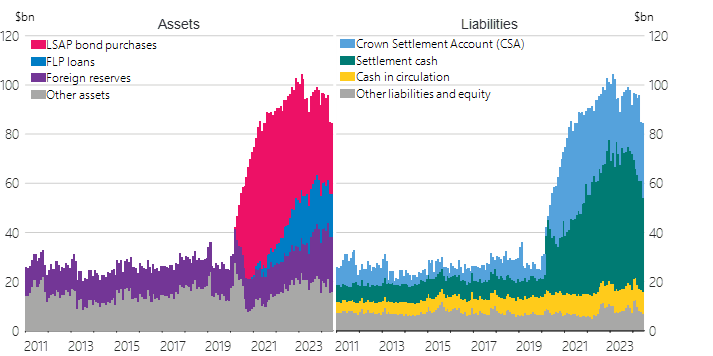
Table 6.1 highlights the impacts of key monetary policy tools on the size of the Reserve Bank’s balance sheet. Importantly, it captures only the direct impacts. The tools can also indirectly impact the balance sheet, such as by influencing the income and expenses of the Reserve Bank or through the measures the Reserve Bank may take to manage the balance sheet impacts.109
Table 6.1: Direct impacts of monetary policy tools on the size of the Reserve Bank balance sheet
| Assets | Liabilities | |
|---|---|---|
| Changes in the OCR | No material direct impact | No material direct impact |
| Large scale asset purchases |
Bond purchases increase the amount of bonds held by the Reserve Bank.
Sale or maturity of the bonds decreases bond holdings. |
Payment for the bonds increases the amount of settlement cash held by banks at the Reserve Bank.
Sale or maturity of bonds reduces liabilities.110 |
| Term lending programmes (e.g. FLP) |
Lending to financial institutions creates loan assets on the Reserve Bank’s balance sheet.
Maturity of loans has the opposite impact. |
The payment of the loaned amounts increases the amount of settlement cash held by banks at the Reserve Bank.
Maturity of the loans has the opposite impact. |
| Purchases (sales) of foreign assets | Purchases (sales) of foreign assets with (for) New Zealand dollars result in an increase (decrease) in foreign assets on the Reserve Bank’s balance sheet. | The payment made (received) for the foreign assets in New Zealand dollars increases (decreases) the level of settlement cash held by banks at the Reserve Bank. |
Settlement cash and the money supply
Settlement cash is considered a form of money and is included in ‘base money’, which is one measure of the amount of money in the economy.111 As settlement cash has grown, measures of base money have grown. Changes to the level of settlement cash were once a key lever used to set the stance of monetary policy. However, since the introduction of the OCR, the level of settlement cash has been largely irrelevant for the stance of monetary policy in New Zealand.112 The increase in base money has hence been a byproduct of the FLP and LSAP, rather than a key channel through which they impact the economy.
Chapter 7: Principles for good deliberation in the Monetary Policy Committee
7.1 Introduction
Principles are rules or beliefs that govern behaviour. This chapter outlines some underlying principles for deliberation by the MPC. These principles are consistent with the Act, Remit and Charter and inform the formal meeting processes set out in chapter 8.113
7.2 Principles of genuine MPC deliberation
Personal preferences, cognitive shortcuts and unconscious biases can dictate the way people assess situations, instead of facts and logical analysis.114 In a group of people, dynamics such as freeriding and groupthink (conformity to group norms or decisions) can drive decisions, instead of rigorous debate, questioning and analysis. To overcome these decision-making hurdles, committees often define and agree an explicit set of decision-making principles.
The principles introduced in this chapter focus on how we can support effective deliberation in the MPC. They add clarity to MPC deliberations by facilitating an environment that supports careful diagnosis, evidence sharing and open deliberation so the committee can make unbiased strategic decisions. A summary of the principles is provided in table 7.1.
Table 7.1: Principles of MPC deliberations for monetary policy
| Principle | Description |
|---|---|
| Clear objectives |
The MPC understands and is committed to the objectives of monetary policy.
MPC meetings have clear objectives and formal protocols to ensure efficient use of time, expertise, and collective commitment. |
| Diversity | Decision makers are diverse in personal characteristics, skills, and thought. |
| Inclusion |
Information Meetings occur in three stages: Information pooling, deliberation, and decision making. Experts present data and advice in information pooling meetings. Decisions are based on all information and evidence. |
|
People Decision meetings are chaired in a way that ensures all views are aired and dissent is normalised. Members come prepared to engage in open and constructive deliberations. Decisions are made by consensus and reflect the balance of views held. |
7.2.1 Principle 1: Clear objectives
In any committee meeting, there is an optimal time to spend deliberating and making decisions before participants lose focus and energy. Clear objectives harness the collective focus of the group and direct it to the committee’s overall purpose and each meeting’s objectives.
The MPC’s objectives and responsibilities are set by the Act, Remit, Charter, and the Code of Conduct. It is crucial that the MPC understands and is committed to these objectives to ensure the collective focus of the committee. Clark and Urwin (2008b) studied board decision making and found that a lack of focus can be a barrier to collective decision making. Clark and Urwin (2008a) recommend that it is best practice to have a clear sense of mission and strong beliefs.
Each formal MPC meeting must have clear objectives to use the committee’s time and expertise effectively. Clarity can be facilitated by setting clear agendas and ensuring meetings run to time. A clear agenda encourages important discussions within the meetings and makes it easier to include such discussions in meeting records.
7.2.2 Principle 2: Diversity
Diversity is beneficial for robust deliberations in a committee and can reduce the likelihood of biased decisions. The MPC can benefit from diversity of thought by including members with a range of skills, personal characteristics, and experiences. Hong and Page (2004) find that diverse individuals solve complex problems using different cognitive processes and so can outperform single decision makers. Blinder and Morgan (2007) find that committees can have genuine gains from group interactions, giving a higher decision quality than the group average.
Diverse committees might make better decisions because they have access to a greater pool of knowledge, provide insurance against extreme views, and are less likely to suffer from groupthink.115 These three characteristics contribute towards unbiased decisions.
First, knowledge pooling can lead to better analysis and decisions in an uncertain environment. Members of a committee may come from various backgrounds and bring different expertise to the table, which provides a larger pool of knowledge to the discussions.
Second, diverse thinking provides a defence against extreme views. For example, a single decision maker may take a strong view against a particular risk to the economic forecasts, while a group of decision makers might more robustly consider risks to the forecasts. Levin (2014) comments that external MPC members are particularly well placed to contribute to risk analysis due to their outside perspectives.
Third, the presence of diverse views reduces the likelihood of groupthink. Groupthink occurs when group members adhere to the general trend of thought within a group without engaging in a robust debate.116 The Institute of Directors in New Zealand says diverse boards ask a wider variety of questions, which reduces the risk of groupthink.117 The principle of diversity does not require members to remove their individual perspectives to make unbiased decisions. Rather, it advocates for each individual to contribute his or her interpretation of data, events, risks and trade-offs so that collective decisions are unbiased.
There are several pitfalls of diversity when making policy decisions. Multilateral organisations are bastions of diversity yet, even when the objectives are clear, deliberations can end in stalemate. This suggests decreasing benefits of diversity once groups reach a certain size. However, the Charter provides for an unattributed vote if consensus cannot be reached.
Diverse committees with a range of views may, however, be less suited to tactical or operational decision making, or crisis situations. A small team of experts may be more suited to make these decisions as they can respond quickly and effectively. MPCs are well placed to make group decisions due to the medium-term and strategic nature of their decisions.
7.2.3 Principle 3: Inclusion
The principle of inclusive processes ensures that the Committee gets the most out of key economic data and information, advice from Reserve Bank staff, and the diversity of views within the MPC.
(a) All information is included in the deliberations
It is important that deliberations reflect all available and relevant information. Therefore, it is appropriate that policy deliberation meetings are distinct from decision-making meetings to ensure that all data and information pertaining to the decision have been understood and debated (see chapter 8 for more detail on the monetary policy decision-making process). It follows that MPC meetings should be set in three broad stages:
- information pooling;
- deliberation; and
- decision making.
Governance literature also recommends that formal processes are used to combat groupthink and decision-heuristics.118 In particular, structuring committee meetings to separate deliberations from decision making helps avoid biased decisions. For example, when an individual states their policy preference early in group discussions or during information pooling sessions, information cascades and anchoring can occur:119
- An information cascade refers to when members begin revealing their policy preferences in turn. The group is then at risk of making a decision without considering all relevant information.
- Anchoring bias refers to individuals becoming anchored to their stated preference. If this occurs when only some information has been presented, then subsequent information and arguments must be relatively more convincing than early information to effectively challenge anchored preferences. This means data and forecasts presented earlier in the information pooling sessions could receive arbitrarily more weight than data and forecasts presented later on.
As well as ensuring information is presented before decisions are made, monetary policy deliberations should be designed to ensure all relevant expertise and advice is included in discussions. Wagner (2002) comments that expertise, or specialist knowledge in one discipline, is not easily transferable to other disciplines. Additionally, broader governance literature recognises that not all members on governance boards are experts in all operations.120
One way to manage potential differences in expertise is for MPC members to have dedicated staff to inform their policy decisions. Some inflation-targeting central banks place a large value on the independence of staff forecasts from the MPC to prevent staff from being unduly influenced by the preferences of the committee. For example, some central banks do not allow staff to appear before the committee. This premium on independence is afforded as most MPC members at these central banks are experts in monetary policy or have access to dedicated research staff.
Conversely, the external MPC members at the Reserve Bank of New Zealand are likely to have fewer resources, as the Reserve Bank, and the Economics Directorate in particular, is significantly smaller than those elsewhere. Reflecting these resource constraints, the Reserve Bank places a greater value on the presence of monetary policy analysts in discussions to ensure that MPC members have the expertise available to inform their policy decisions.
(b) All views are included in the deliberations
Consensus decision making implies that the views of all decision makers, including dissenting views, have been aired and understood in the decision-making process. A consensus decision is “a voluntary agreement following the deliberation and synthesis of different propositions”.121 Consensus building is different from groupthink as members work through differing or opposing positions to come to an agreement.
The presence of diverse members and a consensus decision-making framework do not alone guarantee unbiased and rigorous decision making. Effective conduct during meetings is crucial. Committee members should be allowed to air their views freely and be open to considering other viewpoints. One challenge to effective conduct could be unacknowledged differences in decision-making styles among diverse members, which could sidetrack discussions and result in unproductive meetings. Therefore, it is good practice to appoint a chairperson to ensure effective conduct during committee meetings.122
The Institute of Directors advises that a chairperson has a pivotal influence on the culture of decision-making boards by stimulating debate, fostering a respectful and inclusive culture, limiting overly verbose members, drawing out contributions from reticent members, and guiding discussions so that all views are aired and dissent is normalised. The chairperson also has a role to see that decisions are reached.123 In an MPC, the chairperson should encourage open debate and genuinely collective decision making and guide the committee to a consensus decision.
The principle of inclusion implies that a chairperson should not be overly dominant. A dominant chairperson can overpower the views of members of the committee and reduce the degree of deliberation behind decisions, which can lead to groupthink and conformity.124
The risk of an overly dominant chairperson is higher for a consensus-based MPC and lowest for an individualistic MPC where members express views with votes and individual statements, and decisions are made by majority vote. Blinder’s (2007) typology of monetary policy committees (table 7.2) suggests it is possible that a consensus decision-making MPC could arrive at decisions in a ‘genuinely collegial’ manner or an ‘autocratically collegial’ manner, depending on the behaviour of the chairperson.
Table 7.2: An excerpt from Blinder’s MPC typology: collegial monetary policy committees
| Genuinely collegial | Autocratically collegial |
|---|---|
| Members argue behind closed doors before compromising on a group decision and each member then takes ownership of that decision. | The chair dictates the group consensus decision. |
| ECB | FOMC (Greenspan and Volcker eras) |
Instating a chairperson is not the only way to encourage open deliberation. Another group decision-making convention to reduce the influence of dominant personalities on an MPC is to take turns putting forward the initial policy proposal for the decision. Maier (2010) suggests this convention can reduce the influence of a dominant chairperson, decision-making patterns or groupthink.
Furthermore, to ensure all views are included in the deliberation, members should come to MPC meetings prepared to engage in rigorous and open deliberations, and to be both persuasive and open to being persuaded. Warsh (2016) encourages MPC members to engage in inquiry, not advocacy, open and balanced information sharing, critical thinking and assumption testing to get the most out of the information pooling and deliberation phases.
One example of an open deliberation is a ‘Hawks and Doves’ exercise sometimes used by senior staff who provide advice to the MPC. When the economic outlook could be at a turning point, one adviser presents analysis supporting contractionary monetary policy (the ‘Hawk’), while another presents analysis supporting expansionary monetary policy (the ‘Dove’). This exercise aims to challenge the status quo and encourage wider deliberations. Another example is the presentation of alternative scenarios to test sensitivities around the central forecast and assess monetary policy trade-offs.
Normalising dissent also encourages the group to be open to alternative evidence and views, rather than discounting them.125 Blinder’s (2007) analysis suggests that the level of dissent accepted within the committee could be a key indicator of whether a collegial committee makes decisions collectively or by following the preferences of the chairperson. Lastly, normalising dissent during deliberations enables individuals to take ownership of the shared decision, therefore balancing the consensus decision with individual accountability. This reduces the likelihood of members freeriding in the MPC.126
Chapter 8: Monetary policy decision-making process
8.1 Introduction
Good decisions come from good processes. This chapter lays out processes that support the MPC in being well informed and making good policy decisions. This process upholds the decision-making and communication requirements of the MPC that are specified in the Charter and the principles of deliberation laid out in the previous chapter.
8.2 The policy cycle
The monetary policy process is a continuous cycle of analysis, policy advice, and decision making (figure 8.1).
Each cycle is approximately 12 weeks long and includes 2 monetary policy decision points: an interim Monetary Policy Review (MPR) at week 6 (except in the cycle that covers Christmas and New Year), and a full Monetary Policy Statement (MPS) and policy decision at week 12.127 The MPC approaches each decision armed with expert information and policy advice from senior non-MPC staff members. Most of the information is provided shortly before each decision, ensuring that the Committee has up-to-date information.

This internal decision timetable may be changed as needed to accommodate the availability of MPC members, public holidays, and other relevant factors. MPS release dates and times are fixed (except in extreme circumstances) and published on the Reserve Bank website at least a year in advance.
8.3 Key features of the monetary policy decision-making process
The principles established in chapter 7 have guided key elements of the monetary policy decision-making process (see table 8.3 at the end of this chapter). The full process for a decision accompanied by an MPS (weeks 11–12) includes:
- information pooling meetings spread over two working days, allowing members time to consider the new information;
- deliberation meetings spread over two days, allowing time for open discussion and for senior non-MPC staff members to provide strategic policy advice to the MPC;
- decision meetings taking place after the deliberation meetings, clearly separating them from the information‑pooling and deliberation phases; and
- a decision on the appropriate monetary policy settings taking place on the morning of MPS release day, reducing the risk of sensitive information being inadvertently leaked.
The MPC meeting timetable for a decision accompanying an MPS (weeks 11–12) is set out in table 8.1 and the process for an MPR decision (week six) is a four‑day condensed version of the full process (table 8.2).128 Each stage of the policy review process is discussed further below.
Table 8.1: Full MPS and policy decision timetable
| Phase | Day | Content |
|---|---|---|
| Information pooling (Staff as presenters) |
Monday | Staff present recent developments, issues, and risks. |
| Tuesday | Staff present outlook and strategy. | |
| MPC deliberations (Staff as advisers) |
Wednesday | MPC discusses risks and strategy, including advice provided by senior non-MPC staff. |
| Thursday | MPC discusses written advice from senior non-MPC staff, the preliminary opinions of members, and external messages and tactics. | |
| MPC decisions (Staff not present) |
Friday | MPC discusses individual members’ views on the policy decision and communication, and discusses strategy and key messages. |
| Monday | ||
| Tuesday | MPC finalises external messages. | |
| Wednesday | MPC decides monetary policy settings. MPS release and media conference. |
Table 8.2: Interim policy review decision timetable
| Phase | Day | Content |
|---|---|---|
| Information pooling (Staff as presenters) |
Friday (morning) | Staff present recent developments and outlook. |
| MPC deliberations (Staff as advisers) |
Friday (afternoon) | MPC discusses risks, strategy, and tactics, including advice provided by senior non-MPC staff. |
| MPC decisions (Staff not present) |
Monday | MPC reviews written advice from senior non-MPC staff and the preliminary opinions of MPC members and discusses strategy and key messages. |
| Tuesday | MPC discusses policy decisions and appropriate communications. | |
| Wednesday | MPC decides monetary policy settings and finalises external messages. Summary record of meeting and media release published. |
8.3.1 Information pooling
The monetary policy process includes several features that ensure that MPC members can fully understand and discuss all of the relevant information before forming their views.
Reserve Bank staff gather and curate relevant information, which is provided to the MPC in advance and is presented during the information pooling sessions. This information includes regular content, such as developments in macroeconomic data and economic forecasts, as well as topical analysis on emerging issues. Staff also provide information specifically requested by the MPC. The clear sequencing of the meetings ensures that members have space to absorb and understand the information provided.
The process accounts for the differences in monetary policy expertise within the MPC. After presenting, staff are made available to take questions and provide further explanation. By directly presenting material and answering MPC members’ questions, analysts can better understand how members use and interpret information provided, and tailor future advice accordingly. Members, including external members, do not have dedicated research staff, as MPC members at some larger central banks do.
While managing differences in expertise, the process also seeks to harness the expertise each member brings. For example, the information pooling and deliberation meetings are chaired in a manner that allows collective expertise to be drawn out.
8.3.2 Deliberation meetings and preliminary opinion formation
During the deliberation meetings, the MPC considers what the information presented in the information pooling sessions means for monetary policy. The MPC discusses risks, strategy, external messaging and tactics, as well as the advice provided by senior non-MPC staff and the preliminary opinions of individual MPC members.
The preliminary opinions of individual MPC members are independently recorded at two stages: the first round of individual advice is recorded following the information-pooling meetings and partway through the deliberation meetings, and the second is recorded at the conclusion of the deliberation meetings. These opinions include members’ views on the balance of risks for the inflation objective, the likely impacts of monetary policy on the secondary considerations in the Remit, and their recommendations for monetary policy settings. This process can include members expressing their views in terms of a distribution of different policy outcomes.
The preliminary opinion formation process provides an opportunity for different views to be aired, discussed and challenged, building on the benefits of having a diverse committee with different perspectives.
8.3.3 Decision meetings and communicating the policy decision
The decision-making process begins with a discussion of the preliminary opinions recorded by the MPC members and the reasoning behind them. The Reserve Bank Governor chairs this meeting in a way that ensures collegial discussion and the airing of diverse views, and MPC members aim to reach a consensus view. If MPC members cannot reach a consensus, they can then undertake a vote on the policy decision.
During the decision meetings, the MPC also reviews written advice from senior non-MPC Reserve Bank staff and decides on its wider strategy and key messages.
The final decision meeting is on the morning of the MPS release day – or the morning of the MPR announcement – to reduce the risk of sensitive information being inadvertently released. This is when the MPC makes its monetary policy decision and agrees the key messages it wishes to communicate.
The Charter requires the MPC to produce a summary record of meeting after each policy review, and for this to be accompanied by an MPS quarterly (see chapter 1). The production of these two documents has been incorporated into the timetable above.
The summary record of meeting is a record of the decision meetings. It captures the thinking underpinning the MPC’s decision, as well as the diversity of views that were presented during the discussion. Along with the media release, this summary is finalised on the day of the policy decision.
The MPS contains the MPC’s views on the economic outlook and risk environment. Most of the MPS is finalised two days before the policy announcement, following the information pooling and MPC deliberation meetings.
The first chapter of the MPS, which is the same as the media release, contains the policy decision and the MPC’s view on the key current risks that need to be emphasised. This chapter is inserted on the day of the announcement, along with the summary record of meeting.
As shown in figure 8.1, Reserve Bank staff work throughout the policy cycle to develop expert analysis to support the monetary policy process. This includes analysis of data developments, issues and risks, as well as longer-term research and work regarding the monetary policy framework and strategy.
8.4.1 The Monetary Policy Advisory Group (MPAG)
The Monetary Policy Advisory Group (MPAG) is an internal working group consisting of key advisors on monetary policy matters. As part of this continuous process of expert analysis, the Reserve Bank holds MPAG meetings in between monetary policy decisions.
MPAG’s advisory role supports and complements the MPC’s policy role by governing monetary policy frameworks and discussing work of relevance to monetary policy that may not be directly related to current decisions but may influence future advice to the MPC.
MPAG membership is made up of the internal members of the MPC and senior Reserve Bank staff with relevant expertise in monetary policy, financial markets, financial stability and communications.
Regular MPAG meetings are typically held 3 weeks after each monetary policy decision to provide members with updates on global and domestic economic developments and to discuss staff research and analysis.
There is no expectation that external members of the MPC will attend MPAG meetings, but they are welcome to and have ongoing access to papers submitted to MPAG.
8.5 A policy process to uphold the principles of good deliberation
Underpinning the good processes introduced in this chapter are the principles of good deliberation introduced in chapter 7. Table 8.3 summarises how the principles are reflected in the monetary policy process.
Table 8.3: Principles of good MPC deliberations and related process elements
| Principle | Process implications | |
|---|---|---|
| 1 | Clear objectives | Each meeting has a defined purpose and agenda. |
| 2 | Diversity |
Being inclusive of different intellectual and personal styles by: - allowing time and space for committee members to absorb information and raise queries in ways that suit them, and - spreading out the information pooling phase and the deliberation phase to allow for reflection between meetings and time for MPC members to engage informally with analytical staff if needed. |
| 3 | Inclusion of information | Information and deliberation meetings are chaired by a senior expert, with information presented by analysts so that the committee has direct access to experts when forming views. There is an initial focus on understanding and discussing information, and decision meetings are clearly separated from information and deliberation meetings. |
| Inclusion of people | The Governor chairs decision meetings, in accordance with the Act, to ensure decisions are collegial and reflect diverse views. Deliberation meetings are allocated sufficient time for discussion, and clear avenues are provided for expressing minority views in the summary record of meeting. |
References and footnotes
- Anderson, R (2010), ‘ The First U.S. Quantitative Easing: The 1930s ’, Federal Reserve Bank of St Louis Economic Synopses, 2010/17.
- Archer, D J, A Brookes and M Reddell (1999), ‘ A cash rate system for implementing monetary policy ’, Reserve Bank of New Zealand Bulletin, 62(1).
- Armstrong, J (2015), ‘ The Reserve Bank of New Zealand’s output gap indicator suite and its realtime properties ’, Reserve Bank of New Zealand Analytical Note, AN2015/08.
- Armstrong, J and M Parker (2016), ‘ How wages are set: evidence from a large survey of firms ’, Reserve Bank of New Zealand Discussion Paper, DP2016/03.
- Austin, N and G Reid (2017), ‘ NZSIM: A model of the New Zealand economy for forecasting and policy analysis ’, Reserve Bank of New Zealand Bulletin, 80(1).
- Ball, C (2024), ‘ Assessing and communicating labour market indicators of inflationary pressure ’, Reserve Bank of New Zealand Analytical Note, AN2024/01.
- Bascand, G (2013), ‘ Communication, understanding and credibility ’, speech to Admirals Breakfast Club in Auckland, 6 December 2013.
- Bascand, G (2016), ‘ Inflation pressures through the lens of the labour market ’, speech to Otago University in Dunedin, 7 April 2016.
- Bayarmagnai, G (2023), ‘ Rational inattention to inflation among New Zealand households ’, Reserve Bank of New Zealand Analytical Note, AN2023/04.
- Bernanke, B (2004), ‘ Gradualism ’, speech to a luncheon co‑sponsored by the Federal Reserve Bank of San Francisco and the University of Washington at Seattle, 20 May 2004.
- Bhattacharjee, A and S Holly (2006), ‘ Taking personalities out of monetary policy decision making? Interactions, heterogeneity and committee decisions ’, CDMA Working Paper, No. 0612.
- Blinder, A (2007), ‘ Monetary policy by committee: why and how? ’, European Journal of Political Economy, 23(1), pp. 106–123.
- Blinder, A (2008), ‘ Making monetary policy by committee ’, Princeton University CEPS Working Paper, No. 167.
- Blinder, A and J Morgan (2007), ‘ Leadership in groups: A monetary policy experiment ’, Center for Economic Policy Studies Working Paper, No. 151.
- Bollard, A and Ö Karagedikli (2006), ‘ Inflation targeting: The New Zealand experience and some lessons ’, paper prepared for the Inflation Targeting Performance and Challenges Conference, Central Bank of the Republic of Turkey, Istanbul, 19–20 January 2005.
- Brainard, W‑C (1967), ‘ Uncertainty and the Effectiveness of Policy ’, American Economic Review, Vol. 57, pp. 411–425.
- Brocklesby, S (2022), ‘ The measurement of price stability ’, Reserve Bank of New Zealand.
- Buckle, R A (2018), ‘ Thirty years of inflation targeting in New Zealand: The origins, evolution and influence of a monetary policy innovation ’, Victoria University of Wellington, Chair in Public Finance Working Paper, Working Paper 14/2018.
- Buckle, R A (2023), ‘ Monetary policy and the benefits and limitations of central bank independence ’, speech at the NZ Association of Economists Annual Conference, Auckland, 30 June 2023.
- Callaghan, M (2019), ‘ Expectations and the term premium in New Zealand long‑term interest rates ’, Reserve Bank of New Zealand Analytical Note, AN2019/02.
- Callaghan, M, E Cassino, T Vehbi and B Wong (2019), ‘ Opening the toolbox: how does the Reserve Bank analyse the world? ’, Reserve Bank of New Zealand Bulletin, 82(4).
- Callaghan, M, C Haworth and K Poskitt (2023), ‘ How the Reserve Bank Implements Monetary Policy ’, Reserve Bank of New Zealand Bulletin, 86(3).
- Castaing, A, M Chadwick, J Galimberti, M Sing and E Truong (2024), ‘ Estimates of New Zealand’s nominal neutral interest rate ’, Reserve Bank of New Zealand Bulletin, 87(4).
- Chadwick, M and T Smith (2023), ‘ Great Expectations: performance of survey inflation expectations at improving model‑based inflation forecasts ’, Reserve Bank of New Zealand Analytical Note, AN2023/02.
- Clarida, R, J Galí and M Gertler (1999), ‘ The Science of Monetary Policy: A New Keynesian Perspective ’, Journal of Economic Literature, 37(4), pp. 1661–1707.
- de Roiste, M, A Fasianos, R Kirkby and F Yao (2019), ‘ Household leverage and the housing wealth effect on consumption ’, Reserve Bank of New Zealand Discussion Paper, DP2019/01.
- Detmers, G, Ö Karagedikli and R Moessner (2018), ‘ Quantitative or qualitative forward guidance: Does it matter? ’, BIS Working Papers, No. 742.
- Easton, B (2023), ‘ Learnings from the New Zealand economic history of shocks ’, New Zealand Productivity Commission, Working Paper 2023/02.
- Federal Open Market Committee (2019), ‘ Statement on longer-run goals and monetary policy strategy ’, Board of Governors of the Federal Reserve System.
- Ford, D, E Kendall and A Richardson (2015), ‘ Evaluating monetary policy ’, Reserve Bank of New Zealand Bulletin, 78(7), pp. 1–21.
- Gabaix, X, D Laibson, G Moloche and S Weinberg (2006), ‘ Costly information acquisition: experimental analysis of a boundedly rational model ’, American Economic Review, 96(4), pp. 1043–1068.
- Gerlach‑Kristen, P (2006), ‘Monetary policy committees and interest rate setting’, European Economic Review, 50(2), pp. 487–507.
- Gigerenzer, G (2003), Reckoning with Risk: Learning to Live with Uncertainty, London: Penguin Books.
- Gopinath, G (2023), ‘ Three Uncomfortable Truths for Monetary Policy ’, speech at the ECB Forum on Central Banking, 26 June 2023.
- Grimes, A (2014), ‘ Inflation Targeting: 25 Years’ Experience of the Pioneer ’, Lecture at the Bank of England, in Four Lectures on Central Banking, Motu Working Papers, 14‑02.
- Hawkesby, C (2019), ‘ Speaking, listening and understanding: The art of monetary policy communications ’, speech at the 11th Annual Commonwealth Bank Global Markets Conference, Sydney, 28 October 2019.
- Hawkesby, C (2022), ‘ Our Transformation as a Prudential Regulator ’, speech to the Financial Services Council, Auckland, 22 September 2022.
- Hong, L and S Page (2004), ‘ Groups of diverse problem solvers can outperform groups of high‑ability problem solvers ’, Proceedings of the National Academy of Sciences, 101(46), pp. 16385–16389.
- Hughson, H, G La Cava, P Ryan and P Smith (2016), ‘ The Household Cash Flow Channel of Monetary Policy ’, Reserve Bank of Australia Bulletin, September, pp. 21–30.
- Hunt, C (2004), ‘ Interpreting clause 4(b) of the Policy Targets Agreement ’, Reserve Bank of New Zealand Bulletin, 67(2), pp. 5–20.
- Hyslop, D, A Rice and H Skilling (2019), ‘ Understanding labour market developments in New Zealand, 1986–2017 ’, Reserve Bank of New Zealand Discussion Paper, DP2019/02.
- Institute of Directors in New Zealand (2015), ‘ Getting on board with diversity: A guide to getting diverse talent on boards ’, iod.org.nz (accessed 19 February 2019).
- Institute of Directors in New Zealand (2016), ‘ Board meetings practice guide: Good decision making through effective meetings ’, iod.org.nz (accessed 19 February 2019).
- International Finance Corporation (2015), ‘ Boardroom disputes: How to manage the good, weather the bad, and prevent the ugly ’, International Finance Corporation, Washington DC.
- Irwin, N (2014), ‘ Of Kiwis and currencies: How a 2 percent inflation target became global economic gospel ’, New York Times, 19 December 2014.
- Jacob, P and T van Florenstein Mulder (2019), ‘ The flattening of the Phillips curve: Rounding up the suspects ’, Reserve Bank of New Zealand Analytical Note, AN2019/06.
- Jacob, P and F Robinson (2019), ‘ Suite as! Augmenting the Reserve Bank’s output gap indicator suite ’, Reserve Bank of New Zealand Analytical Note, AN2019/08.
- Kahneman, D (2003), ‘ Maps of rationality: psychology for behavioural economics ’, American Economic Review, 93(5), pp. 1449–1475.
- Kamber, G and B Wong (2016), ‘ Testing an interpretation of core inflation measures in New Zealand ’, Reserve Bank of New Zealand Analytical Note, AN2016/06.
- Kamber, G, C McDonald, N Sander and K Theodoridis (2015), ‘ A structural model for policy analysis and forecasting: NZSIM ’, Reserve Bank of New Zealand Discussion Paper, DP2015/05.
- Karagedikli, O and K Lees (2007), ‘ Do the Central Banks of Australia and New Zealand Behave Asymmetrically? Evidence from Monetary Policy Reaction Functions ’, Economic Record, Vol. 83(261), pp. 131–142.
- Kendall, R and T Ng (2013), ‘ The 2012 Policy Targets Agreement: an evolution in flexible inflation targeting in New Zealand ’, Reserve Bank of New Zealand Bulletin, 76(4), pp. 3–12.
- Kengmana, B (2021), ‘ RAMPed up: RBNZ’s Additional Monetary Policy toolkit ’, Reserve Bank of New Zealand Bulletin, 84(1).
- Knowles, J, L Austin and L Kerr (2023), ‘ Money creation in New Zealand ’, Reserve Bank of New Zealand Bulletin, 86(1).
- Kydland, F and E Prescott (1977), ‘ Rules rather than discretion: The inconsistency of optimal plans ’, Journal of Political Economy, 85(3), pp. 473–491.
- Levin, A (2014), ‘ The design and communication of systematic monetary policy strategies ’, Journal of Economic Dynamics and Control, Vol. 49, pp. 52–69.
- Lewis, M, J McDermott and A Richardson (2016), ‘ Inflation expectations in New Zealand: Measures and implications ’, Reserve Bank of New Zealand Bulletin, 79(4).
- McDermott, C J and R Williams (2018), ‘ Thirty years of inflation targeting in New Zealand ’, speech, Reserve Bank of New Zealand.
- Reddell, M (1999), ‘ Origins and evolution of inflation targeting in New Zealand ’, Reserve Bank of New Zealand Bulletin, 62(3).
- Ranchhod, S (2013), ‘ A measure of core inflation in New Zealand ’, Reserve Bank of New Zealand Bulletin, 76(1).
- Silk, C (2023), Building a balance sheet to support financial stability , Reserve Bank of New Zealand.
- Smith, C and O Aziz (2019), A history of monetary policy objectives in New Zealand , Reserve Bank of New Zealand Bulletin, 82(2).
- Stats NZ, Gross domestic product (GDP) .
- Stats NZ, Consumers Price Index: Sources and methods
- Stats NZ, Measuring capital stock in the New Zealand economy
- Taylor, J B (1979), Estimation and control of a macroeconomic model with rational expectations , Econometrica, 47(5), pp. 1267–1286.
- Taylor, J B (1993), Discretion versus policy rules in practice , Carnegie-Rochester Conference Series on Public Policy, 39, pp. 195–214.
- Treasury, H M (2008), Myners principles: Consultation on investment decision-making , HM Treasury, United Kingdom.
- Truong, E, P Jacob and A Richardson (2019), Has monetary policy transmission weakened in New Zealand? , Reserve Bank of New Zealand Analytical Note, AN2019/10.
- Wadsworth, J (2017), ‘ International experiences with inflation targeting ’, Reserve Bank of New Zealand Bulletin, 80(8).
- Walsh, C E (1995), ‘ Optimal contracts for central bankers ’, American Economic Review, 85(1), pp. 150–167.
- Warsh, K (2016), ‘ Institutional design: Deliberations, decisions, and committee dynamics ’, in J H Cochrane and J B Taylor (eds.), Central Bank Governance and Oversight Reform, Hoover Institution Press, Stanford, California, pp. 173–220.
- Wong, J and B Cook (2012), ‘ Do actual and/or expected OCR changes affect the New Zealand dollar? ’, Reserve Bank of New Zealand Analytical Note, AN2012/09.
- Wong, M (2017), ‘ Revisiting the wealth effect on consumption in New Zealand ’, Reserve Bank of New Zealand Analytical Note, AN2017/03.
- The Governor is appointed by the Governor‑General on the recommendation of the Minister of Finance, but must be nominated by the Reserve Bank Board.
- Internal members must be appointed for a term of up to 5 years and may be reappointed for two further terms. External members are appointed for up to 4 years and may be reappointed for one further term. See clause 17 of Schedule 3 .
- See clause 20(2) of Schedule 3 of the Act.
- See the February 2024 speech by Reserve Bank Governor Adrian Orr, “The MPC Remit and 2 percent inflation” .
- Hawkesby (2022) outlines the Reserve Bank’s role as prudential regulator.
- Silk (2023) discusses how central banks can use balance sheets to support financial stability.
- See Dunstan (2014) on the interaction between monetary and macro‑prudential policies.
- See Hunt (2004) for discussion of “unnecessary instability”.
- See Blinder (2008) and Bascand (2013) on monetary policy communication.
- See Hawkesby (2019) .
- See Review and Assessment of the Formulation and Implementation of Monetary Policy (RAFIMP) , published 2022.
- See Ford, Kendall and Richardson (2015) .
- See Supporting New Zealand’s economic stability – Toitū te Ōhanga .
- See Callaghan, Haworth and Poskitt (2023) .
- The Statement of Financial Risk Management is contained in the Reserve Bank’s latest Annual Report
- Smith and Aziz (2019) provide a history of monetary policy objectives in New Zealand.
- Wadsworth (2017) provides an international comparison of inflation‑targeting frameworks.
- Spencer Russell (1984) discussed the Government’s commitment to bringing inflation under control, noting that past retreats from tight policy had undermined credibility.
- Buckle (2018), McDermott and Williams (2018), Grimes (2014), Bollard and Karagedikli (2006), and Reddell (1999) discuss the history of monetary policy in New Zealand.
- See Reserve Bank Bulletin (March 1990) on the Reserve Bank of New Zealand Act 1989.
- Irwin (2014) discusses the global adoption of inflation targeting.
- Buckle (2018) highlights the Bundesbank’s post‑war experience in achieving low inflation.
- See the second consultation paper for the 2022–23 Remit Review .
- Other costs of inflation include “menu costs”, where firms incur costs from changing prices more frequently.
- Lockyer (2022) evaluates the optimal level of the inflation target.
- Brocklesby (2022) discusses the measurement of price stability.
- Buckle (2023) discusses the benefits and limits of central bank independence.
- Section 3(b) of the Reserve Bank of New Zealand Act 2021 specifies the Bank’s purpose of promoting a prosperous, sustainable, and productive economy.
- Nominal income targeting is sometimes proposed as an alternative to flexible inflation targeting.
- Kydland and Prescott (1977) discuss the time‑inconsistency problem in monetary policy.
- The March 1990 Policy Targets Agreement specified price stability by the year ending December 1992.
- The current inflation objective allows the Bank to look through temporary price disturbances.
- The first 1990 Policy Targets Agreement also required consideration of financial system soundness.
- The 1999 Policy Targets Agreement introduced an explicit requirement to avoid unnecessary instability in output, interest rates, and the exchange rate.
- Between 2018 and 2023, maximum sustainable employment was a legislated monetary policy objective.
- In 2023, employment was incorporated into the instability‑avoidance considerations.
- The Reserve Bank’s inflation target supports the broader purposes of the Act.
- The Federal Open Market Committee (2019) provides an international example of a policy framework statement.
- See the Reserve Bank’s Monetary Policy Framework publication.
- Rumelt (2011) discusses principles of effective strategy.
- Karagedikli and Lees (2007) examine symmetric output‑gap behaviour in New Zealand policy.
- Dunstan (2014) analyses interactions between macro‑prudential and monetary policies.
- Hunt (2004) discusses interest‑rate volatility.
- Chapter 6 examines the effects of interest rates on output and the exchange rate.
- Ford, Kendall and Richardson (2015), and Kendall and Ng (2013), discuss stability‑improving interest‑rate paths.
- Brainard (1967) provides the classic argument for gradualism under uncertainty.
- Bernanke (2004) discusses gradualism and the influence of policy rates on long‑term rates.
- On COVID‑19 responses, see Mann (2023) and Gopinath (2023) .
- Armstrong and Parker (2016) examine firm‑level inflation expectations.
- See Bayarmagnai (2023) and Chadwick and Smith (2023) .
- Stats NZ GDP data .
- Stylised chart showing expenditure‑based GDP components for the year to September 2023.
- Richardson, van Florenstein Mulder and Vehbi (2019) use machine‑learning methods for GDP nowcasting.
- Stats NZ indicator data.
- de Roiste, Fasianos, Kirkby and Yao (2019) examine household leverage and the housing wealth effect.
- Imports are treated as a subtraction in the expenditure measure of GDP.
- Treasury macroeconomic projections are published in the BEFU, HYEFU and PREFU.
- Stats NZ capital‑stock methodology .
- Hyslop, Rice and Skilling (2019) provide a long‑run history of the New Zealand labour market.
- Bascand (2016) discusses labour‑force outflows.
- Statistics New Zealand’s Quarterly Employment Survey (QES) differs conceptually from the Household Labour Force Survey (HLFS).
- See Statistics New Zealand guidance on unemployment statistics: Guide to unemployment statistics and Household Labour Force Survey .
- See Ball (2024) on labour‑market indicators of inflationary pressure.
- The employment gap is not directly observable and must be inferred from a range of indicators.
- See Bayarmagnai (2023) on household inflation expectations.
- Firms’ inflation expectations are discussed in Armstrong and Parker (2016) .
- See also Chadwick and Smith (2023) .
- Financial‑market inflation expectations can be inferred from nominal and indexed bond yields.
- GDP data are published by Statistics New Zealand .
- National accounts GDP are published on both a production and expenditure basis.
- See Richardson, van Florenstein Mulder and Vehbi (2019) on machine‑learning GDP nowcasting.
- See accompanying Statistics New Zealand indicator datasets.
- Household leverage and housing wealth effects are examined in de Roiste, Fasianos, Kirkby and Yao (2019) .
- Imports are deducted in the expenditure measure of GDP.
- Treasury macroeconomic projections are published in the BEFU, HYEFU and PREFU.
- Capital‑stock measurement is described by Statistics New Zealand .
- Long‑run labour‑market developments are analysed in Hyslop, Rice and Skilling (2019) .
- Labour‑force outflows are discussed in Bascand (2016) .
- See Statistics New Zealand’s Quarterly Employment Survey.
- See Statistics New Zealand’s Household Labour Force Survey.
- For international comparisons, see Wadsworth (2017) .
- See Negative official cash rate .
- See Anderson (2010) on comparable US policies in the 1930s.
- Bond purchases increase settlement cash held at the Reserve Bank.
- For the LSAP programme, see In retrospect: Monetary policy in New Zealand 2017–2022 .
- See item 6 in the “Areas for improvement” section of the RAFIMP review.
- Under the Funding for Lending Programme (FLP), banks’ access depended on loan portfolios.
- See the FLP term sheet .
- See item 7 in the “Areas for improvement” section of the RAFIMP review.
- See the Foreign Reserves Management and Coordination Framework .
- See Kengmana (2021) .
- See the Memorandum of Understanding on alternative monetary policy tools .
- See Principles governing monetary policy tools .
- Further discussion of LSAP financial impacts is in the RAFIMP review.
- Section 121 of the Reserve Bank of New Zealand Act 2021.
- See the Reserve Bank Annual Report .
- See Smith and Aziz (2019) .
- See Wadsworth (2017) .
- Spencer Russell (1984) on the credibility of sustained monetary restraint.
- See Buckle (2018) .
- See McDermott and Williams (2018) .
- See Grimes (2014) .
- See Bollard and Karagedikli (2006) .
- See Reddell (1999) .
- Reserve Bank Bulletin (March 1990) on the Reserve Bank of New Zealand Act 1989.
- See Irwin (2014) .
- Buckle (2018) on the Bundesbank’s post‑war experience.
- See the second consultation paper for the 2022–23 Remit Review.
- Menu costs are one of the costs of inflation.
- See Lockyer (2022) .
- See Brocklesby (2022) .
- See Buckle (2023) .
- Section 3(b) of the Reserve Bank of New Zealand Act 2021.
- Nominal income targeting as an alternative framework.
- See Kydland and Prescott (1977) .
- Liquidity‑management operations may influence settlement cash.
- Bond maturities affect the Crown Settlement Account unless offset by issuance.
- See Knowles, Austin and Kerr (2023) .
- See Silk (2022) .
- An extended version of this chapter was published as Price and Wadsworth (2019)
- See Wagner (2002), Gigerenzer (2004) and Gabaix et al. (2006).
- See Kahneman (2003) .
- See Blinder (2007) .
- See Bhattacharjee and Holly (2006) .
- See Institute of Directors in New Zealand (2016).
- See International Finance Corporation (2015).
- Policy decision dates are published around 18 months in advance to enable financial market participants to write contracts for the appropriate dates. There is no interim review between the November and February Statements due to the difficulty of scheduling meetings between Christmas and New Year.
- This internal decision timetable may be changed as needed to accommodate the availability of MPC members, public holidays, and other relevant factors. MPS release dates and times are fixed (except in extreme circumstances) and published on the Reserve Bank website at least a year in advance.